
Designing for human wellness
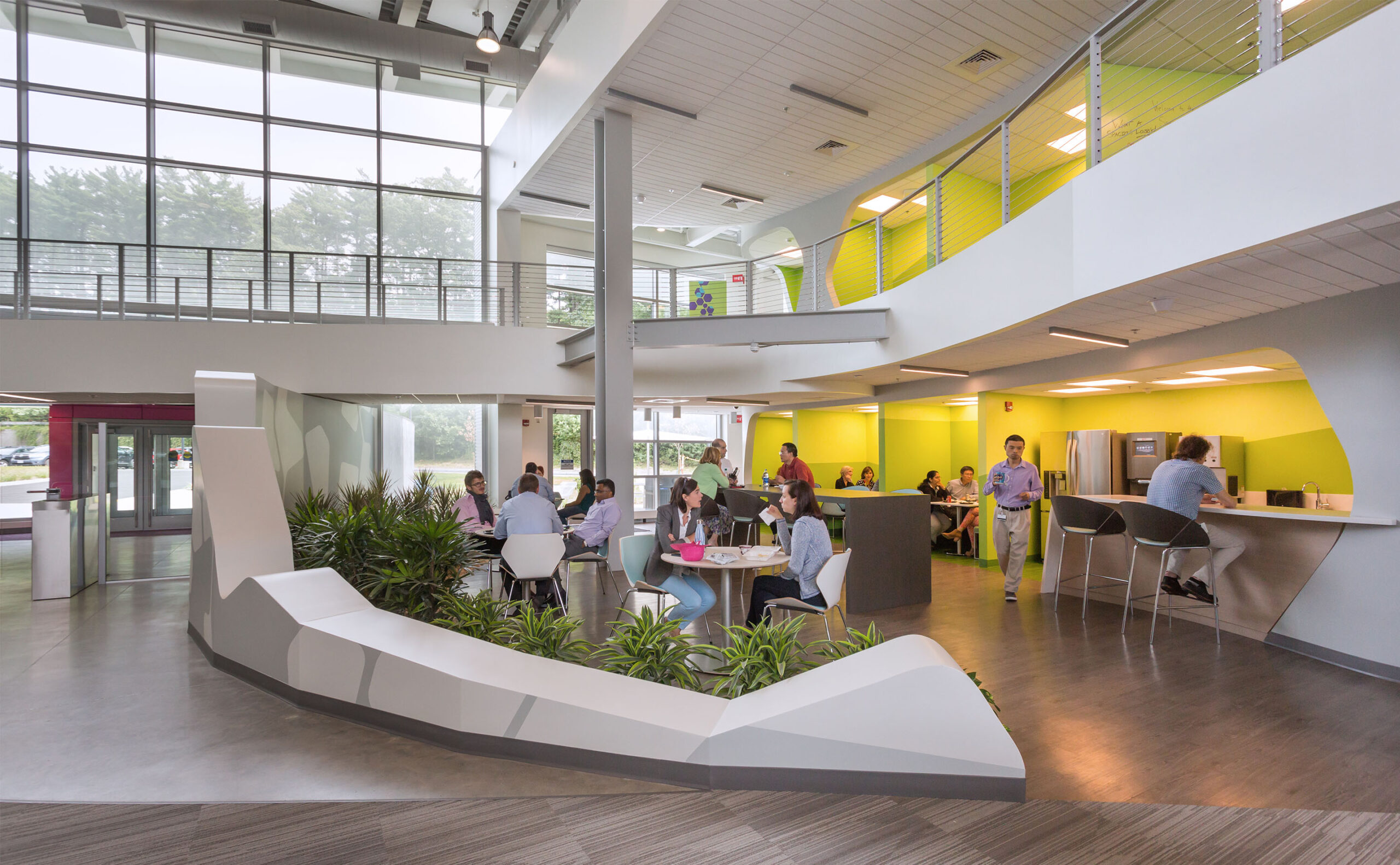


We are acutely aware that the built environment significantly affects the comfort, productivity, health, and wellness of occupants and users. According to the Environmental Protection Agency, Americans spend 93% of their time indoors. While the bulk of that time is spent at home (including sleeping), most of the remaining time indoors is spent in workspace and educational settings.
Consequently, we consider very seriously the quality of the spaces we design. Our design baseline always places a high premium on providing well-lit interiors, abundant natural light, views to the exterior, high-quality air distribution, well-balanced thermal comfort, excellent acoustic modulation, and healthful building and furnishing materials. But we go beyond these essentials because we respect the importance of creating environments that encourage and support daily healthy behaviors. Examples include designing stairs that are so attractive that they are preferred over the elevator, providing a variety of appealing interaction areas that engage both introverts and extroverts to promote mental health well-being, using natural materials, designing indoor environments that accommodate plants (biophilia), and including outdoor venues such as roof decks and even classrooms where possible.
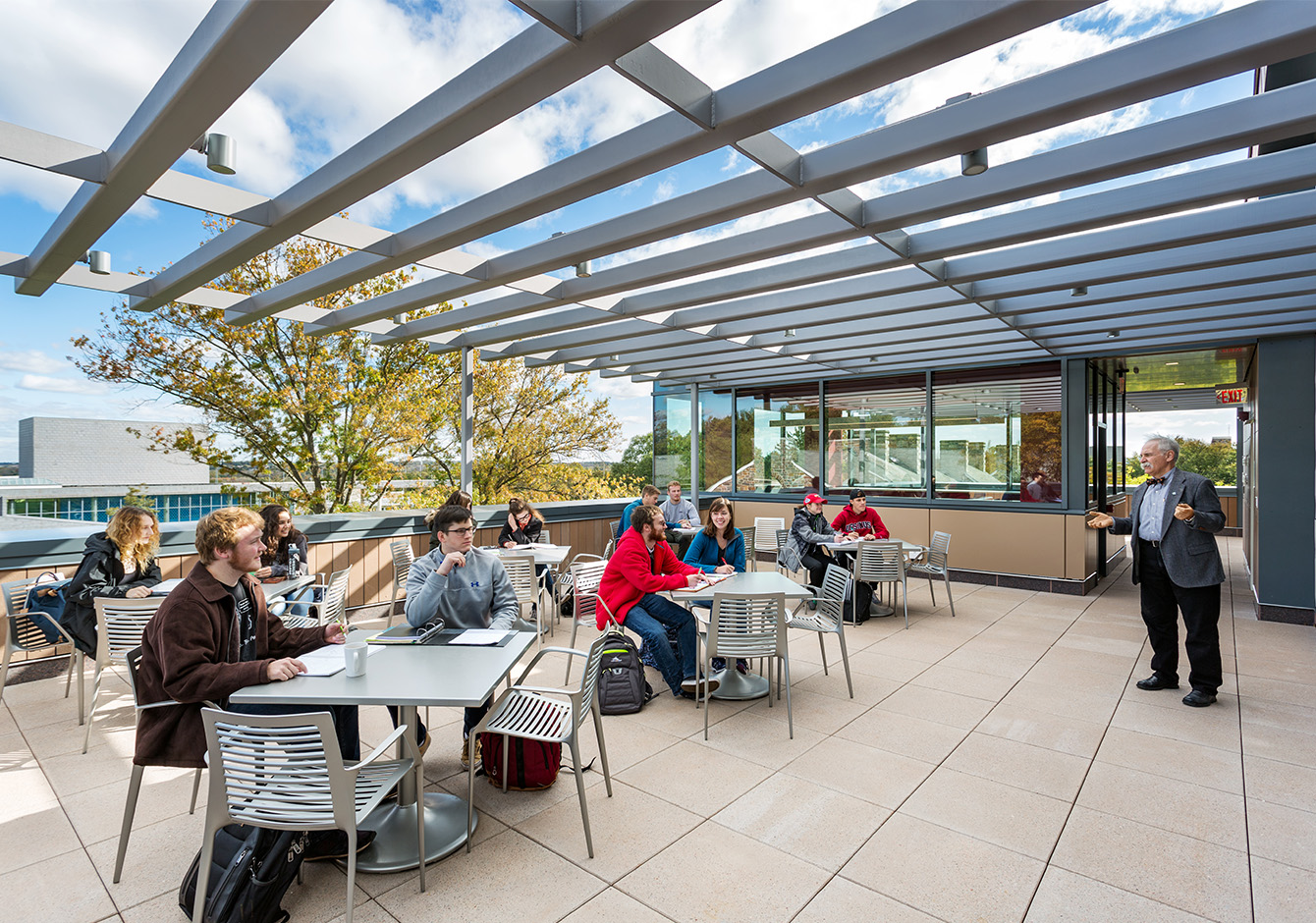
Ursinus College, Innovation and Discovery Center
This attention to user well-being manifests itself in a variety of design features throughout the buildings we design. At the Cuyahoga Community College STEM Center (shown here and at the start of this section), a generous skylight (that includes integrated PV cells to generate energy and reduce glare) and “living walls” bring natural daylight and biophilia into the double-height Student Commons. An easy access, centrally located stairway connects the First and Second Floors, both of which provide a wide variety of seating options for study and interaction.
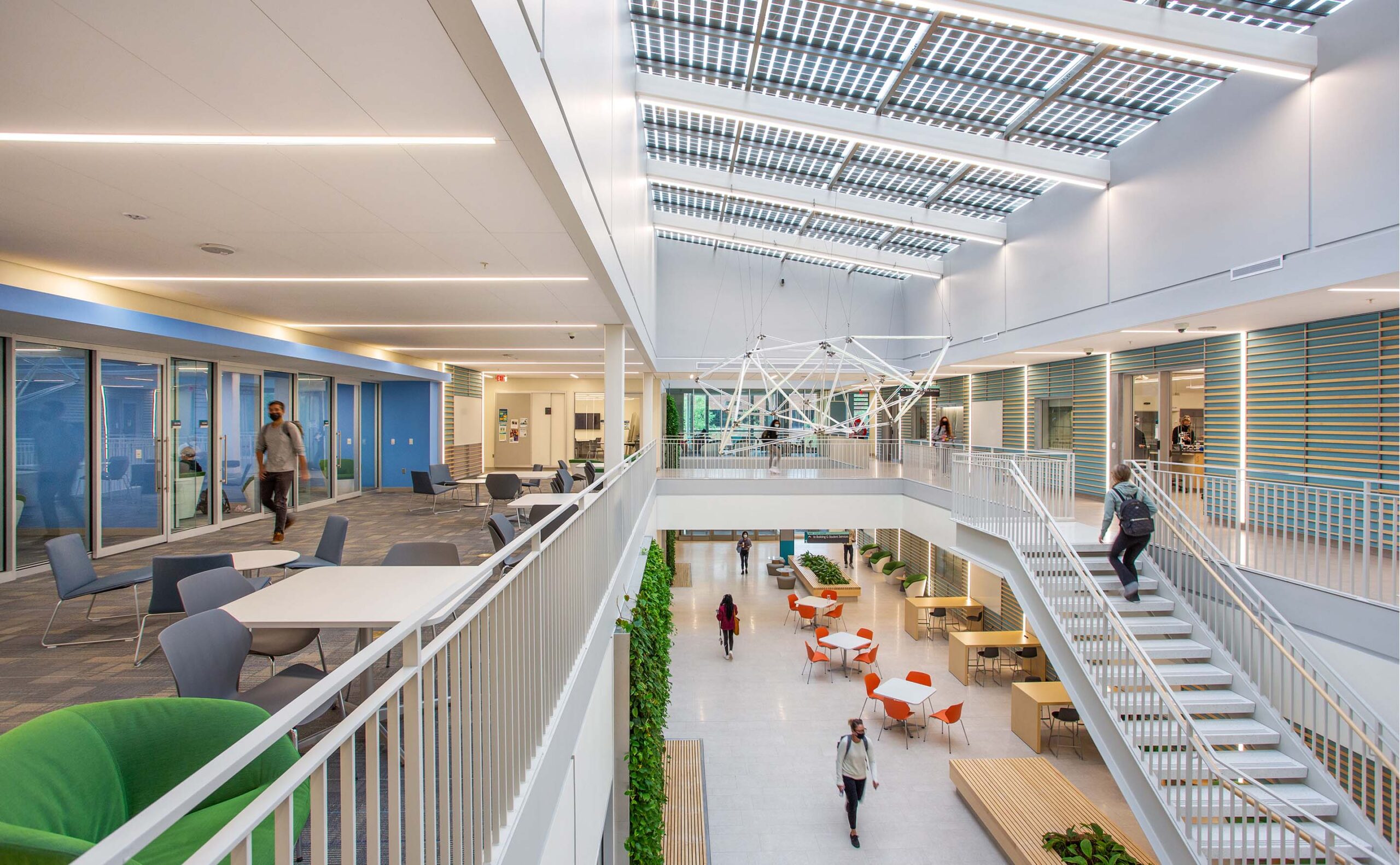
Cuyahoga Community College, STEM Center
Additionally, this space features low-velocity displacement ventilation to condition the Commons by natural convection created by the density difference between hot and cold air. As a result, the air distribution is unusually quiet and evenly dispersed. Throughout the space, noise reduction is prioritized to an NRC rating of less than 1.00 by employing fabric-wrapped, wood spline acoustic panels and the living walls.
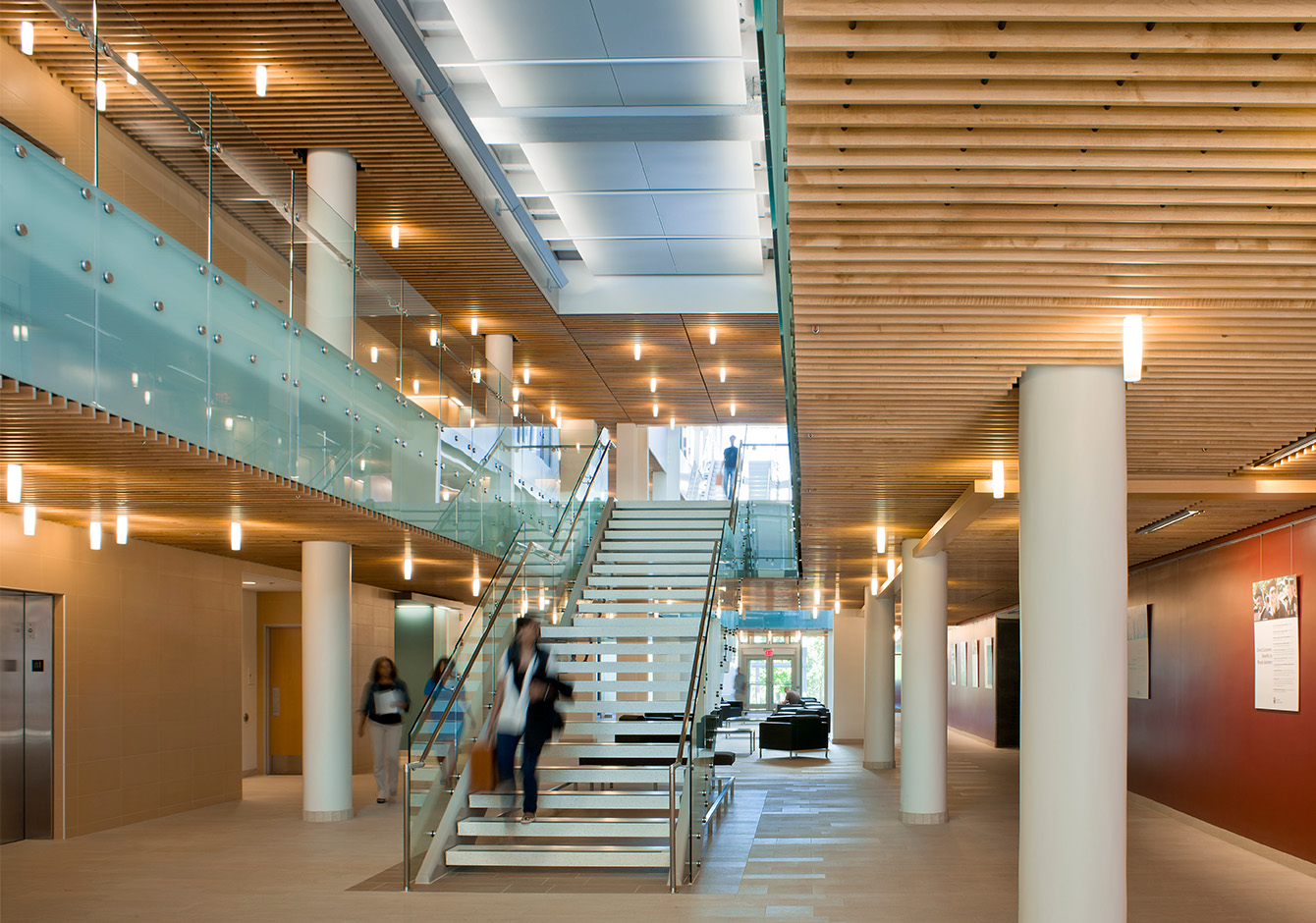
Students at Brown University’s Warren Alpert Medical School favoring the stairs over the elevator.
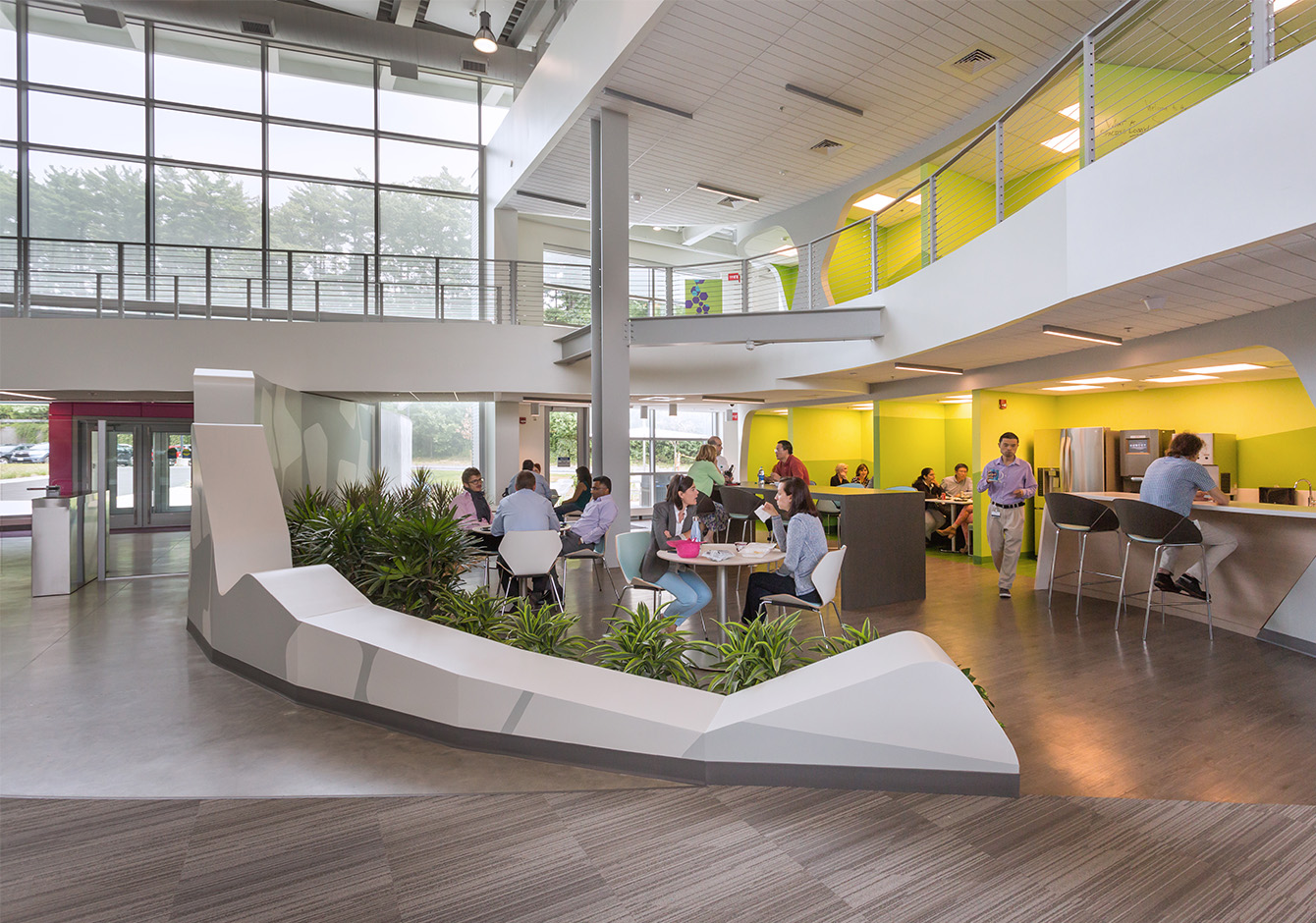
Biophilia from outside penetrates the indoor environment.
Our design of EMD Serono’s dry lab facility also includes biophilia, natural daylighting, healthy materials, a wide variety of meeting and eating spaces, and the encouragement of movement inspired by the inviting and inclusive character of the building. The project was awarded Gold Level WELL Certification for New and Existing Buildings from the International Well Building Institute (IWBI); it was the first project in the United States and the second in the world to achieve that level of certification in this category.