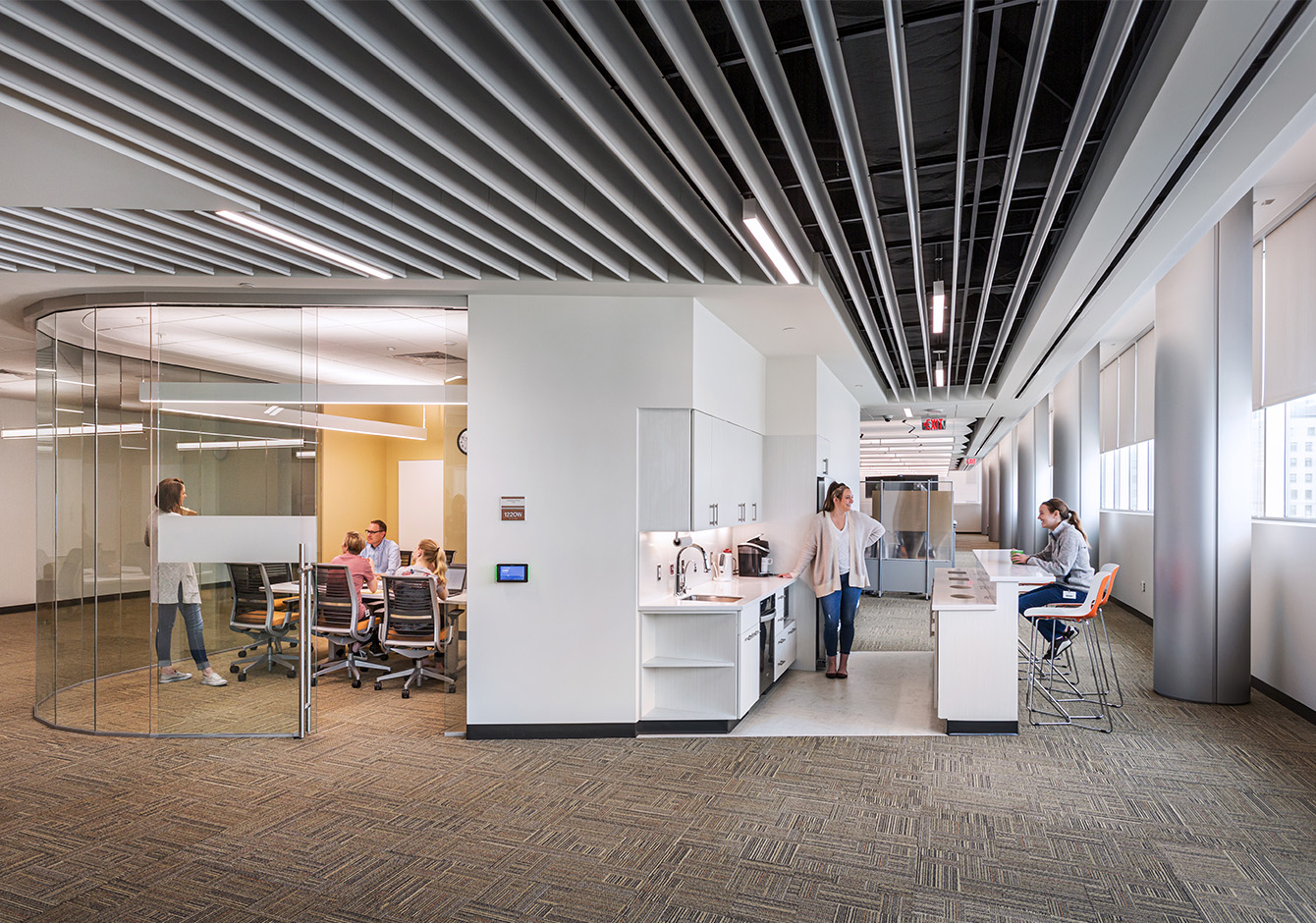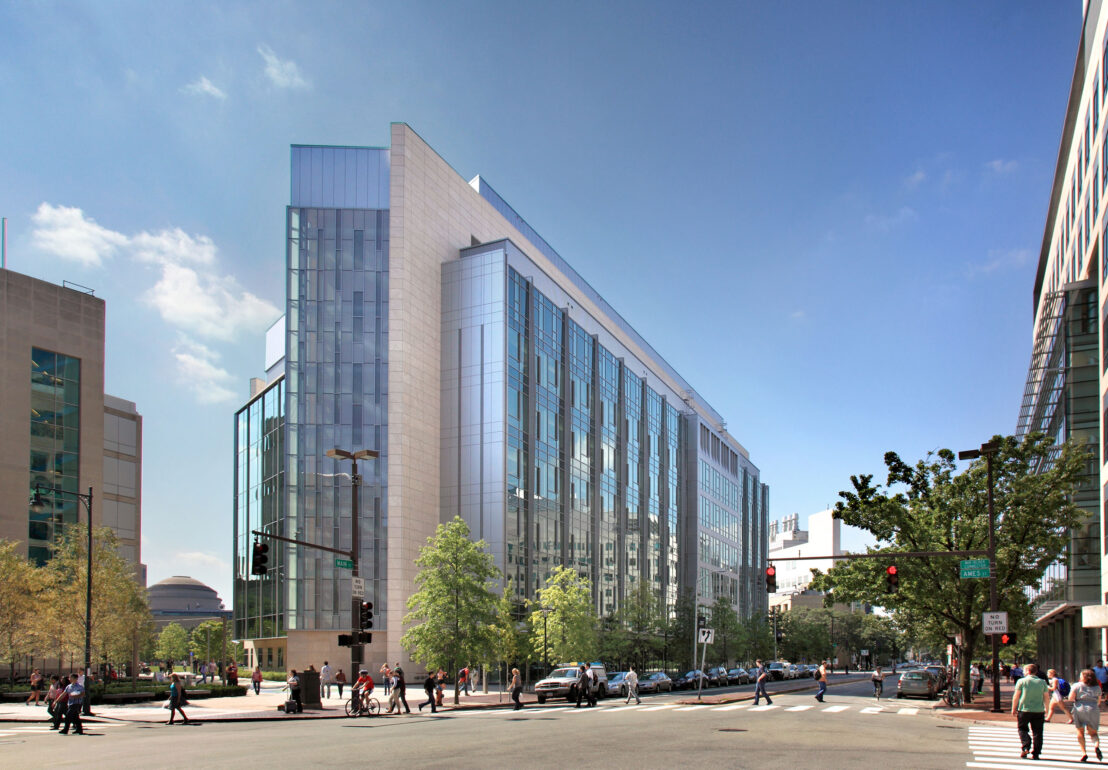
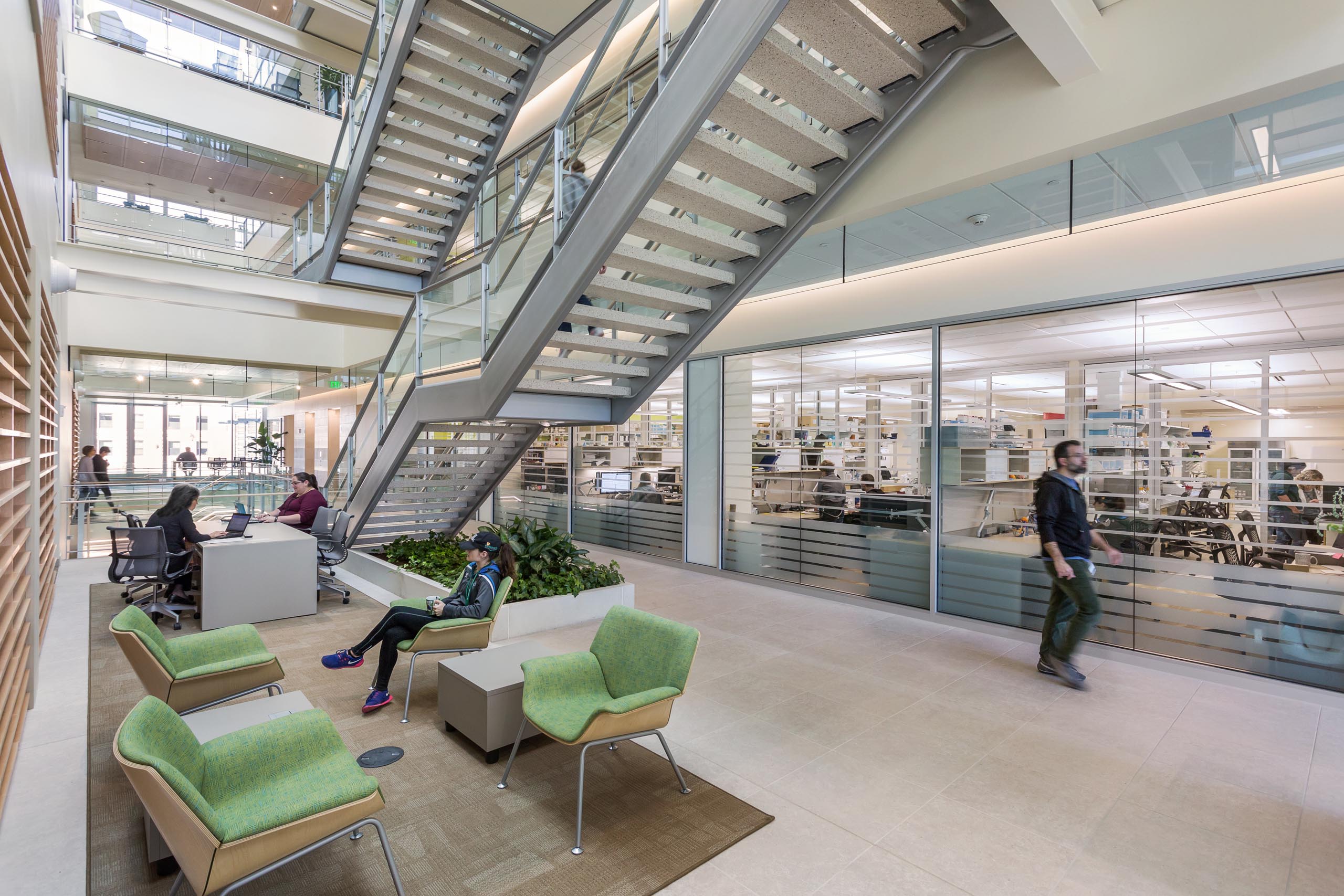


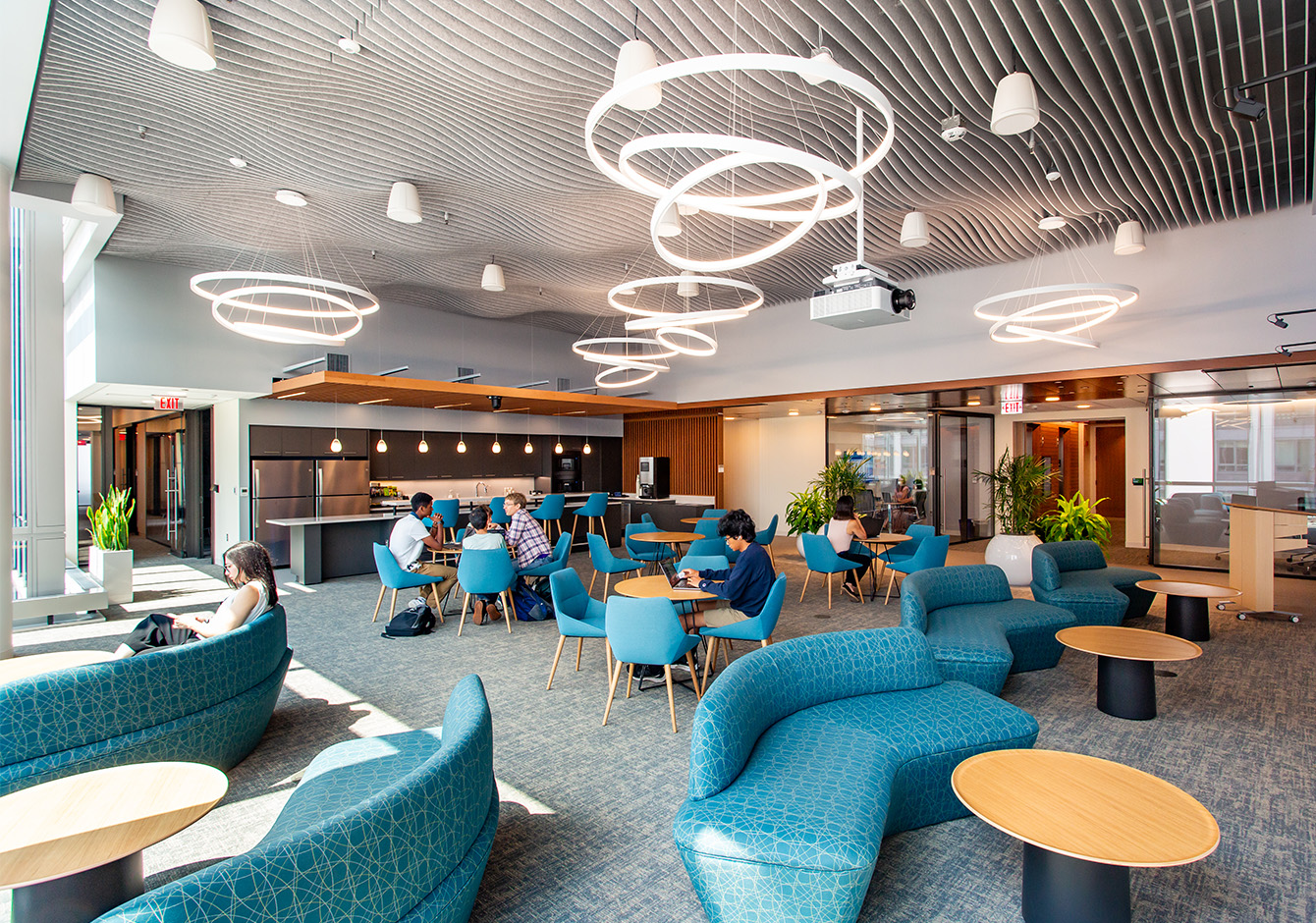
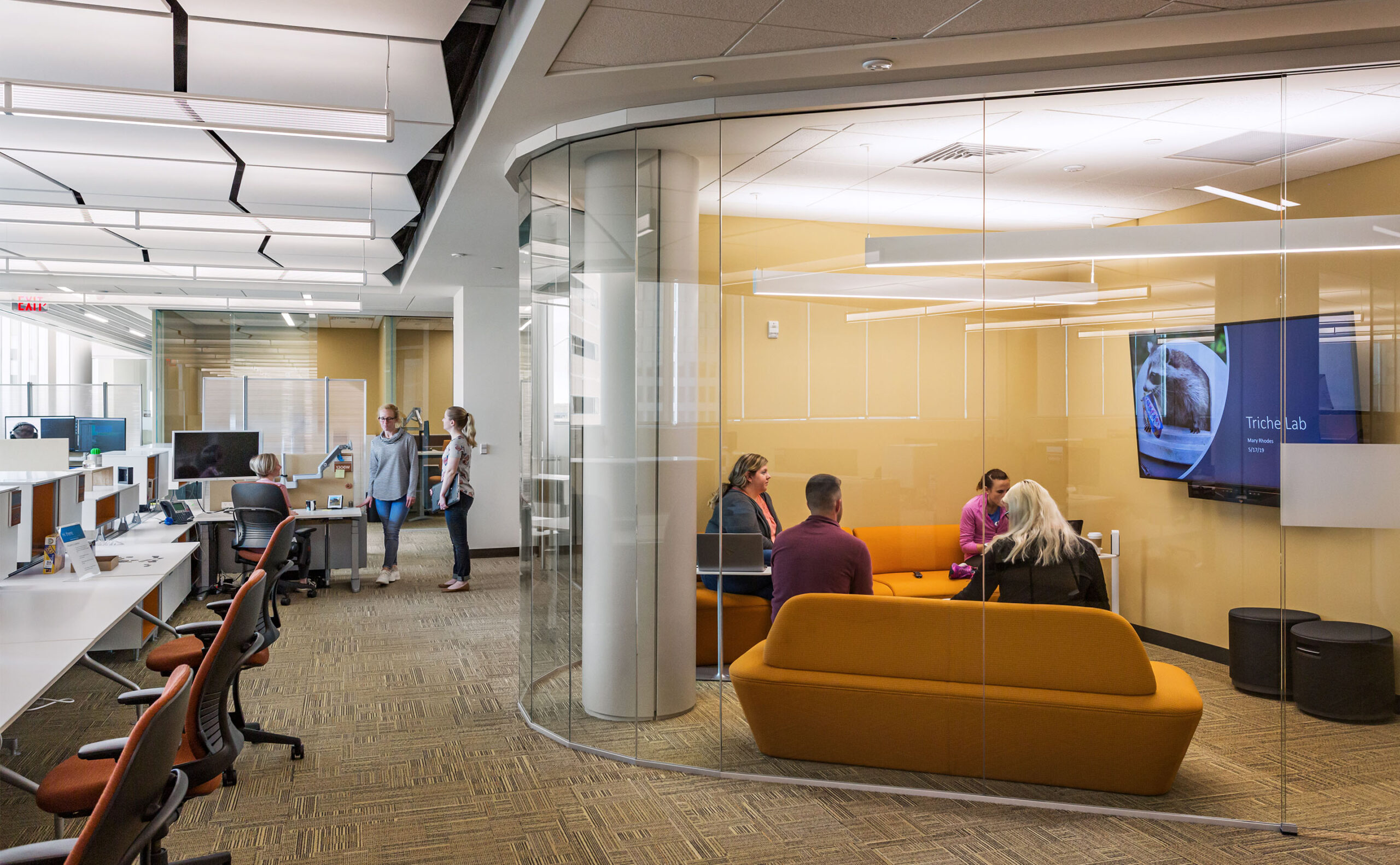
We plan research labs with specific elements to foster collaboration: a mix of formal and informal meeting spaces, flexible or multipurpose rooms, shared “core” resources and support spaces, and robust audiovisual technology, among other features. In particular, we include a variety of spaces for interaction. We pay special attention to these spaces because they provide the “connective tissue” that creates a cohesive sense of place in the overall building.
We promote design principles that increase visibility and promote human interaction: flexible floorplans, key space adjacencies, glass walls, and display surfaces. These design elements support openness and collaboration: increasing chance interactions, providing opportunities to see the research “in action”, and improving identity and participation. Shown at right: the Van Andel Research Institute.