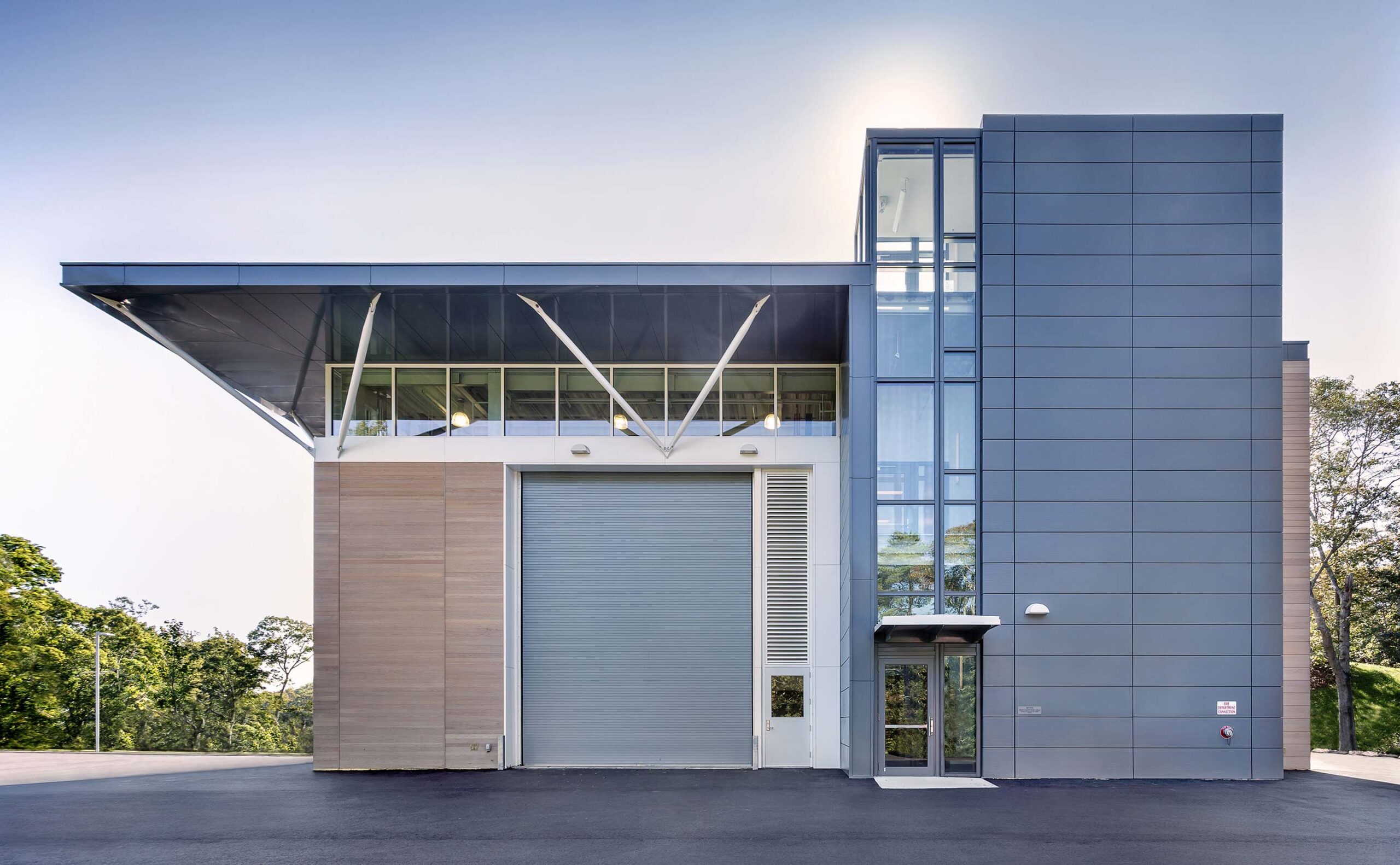
Woods Hole Oceanographic Institution

Laboratory for Ocean Sensors and Observing Systems

Woods Hole, Massachusetts

Size
30,000 gsf

Services
Feasibility Study
Programming
Lab Planning
Architecture

Certifications
LEED Gold

Awards
AIA New England, Design Citation

Funded by a grant from the National Institute for Standards and Technology (NIST), the sadmiaccommodates several diverse research groups, including the Ocean Observatories Initiative (OOI), a $300 million infrastructure project sponsored by the National Science Foundation; the Martha’s Vineyard Coastal Observatory (MVCO), an underwater research facility and test site constructed and operated by WHOI; the WHOI Ocean Bottom Seismometer Instrument Pool (OBSIP), an NSF-funded facility providing instrumentation in support of marine geology, seismology, and geodynamics research; and the Environmental Sample Processor Lab (ESP), where procedures are performed for genetic identification of marine organisms and for clarifying their role in biogeochemical cycles.
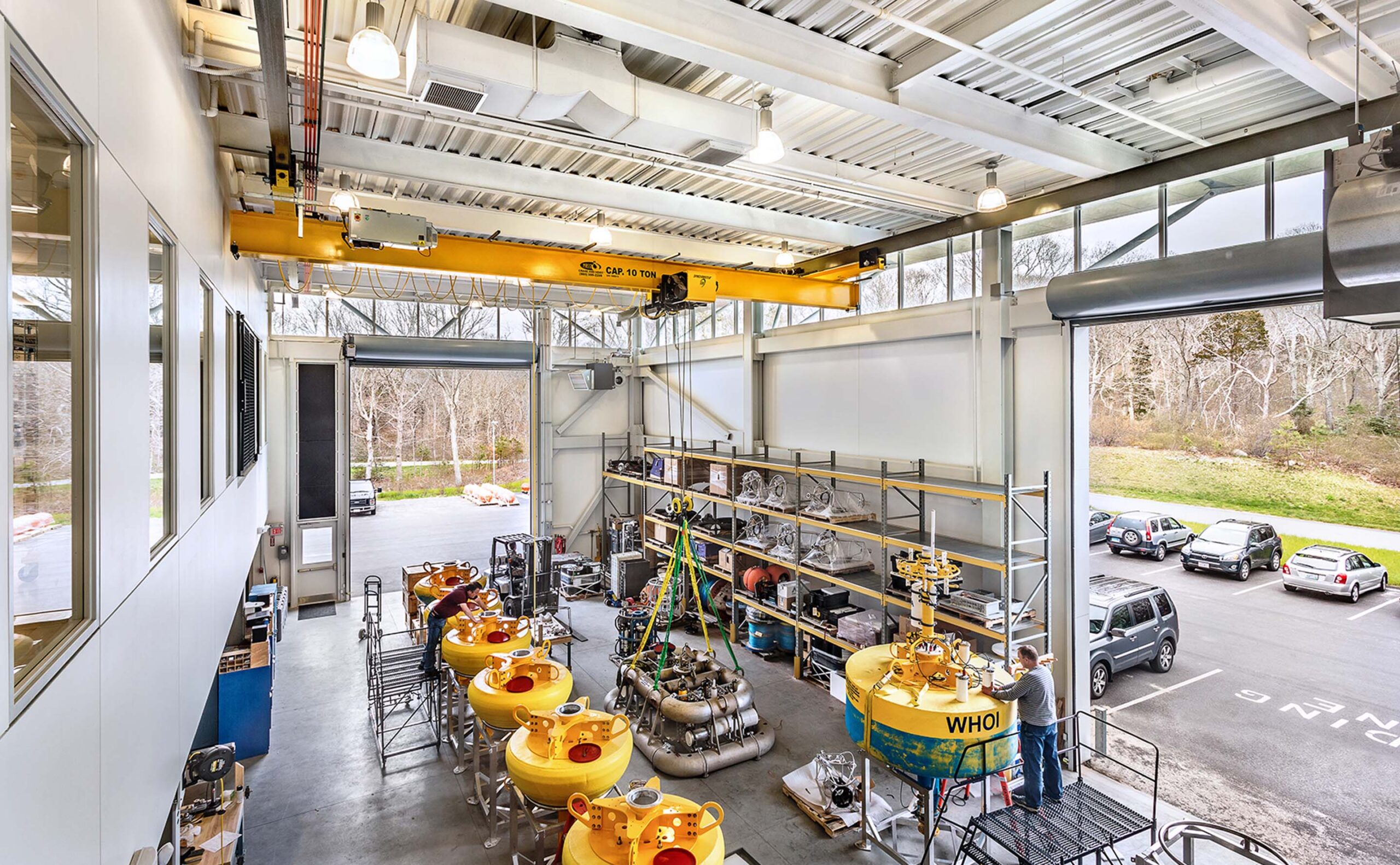
large warehouse full of equipment with open bays
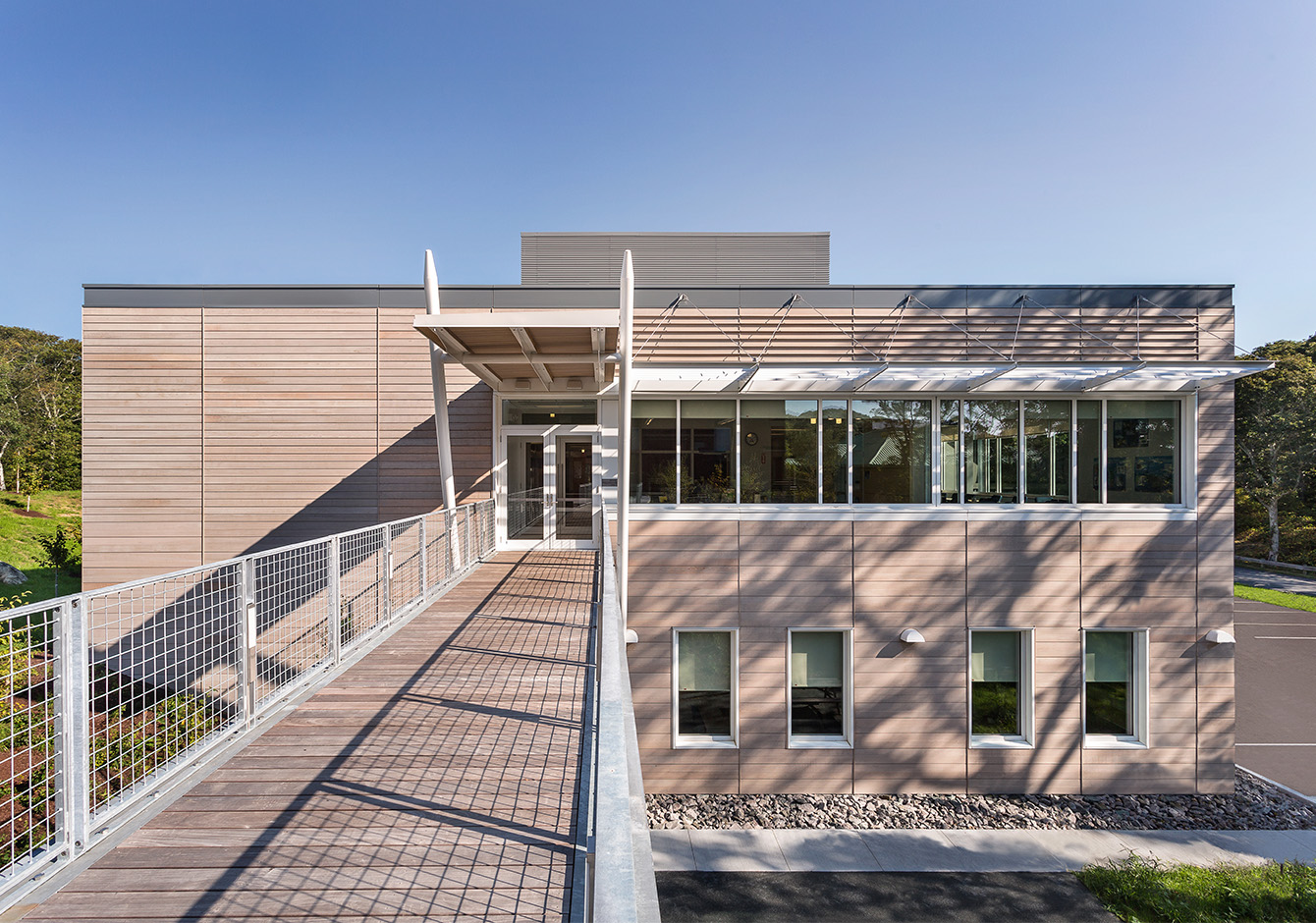
suspended outdoor walkway
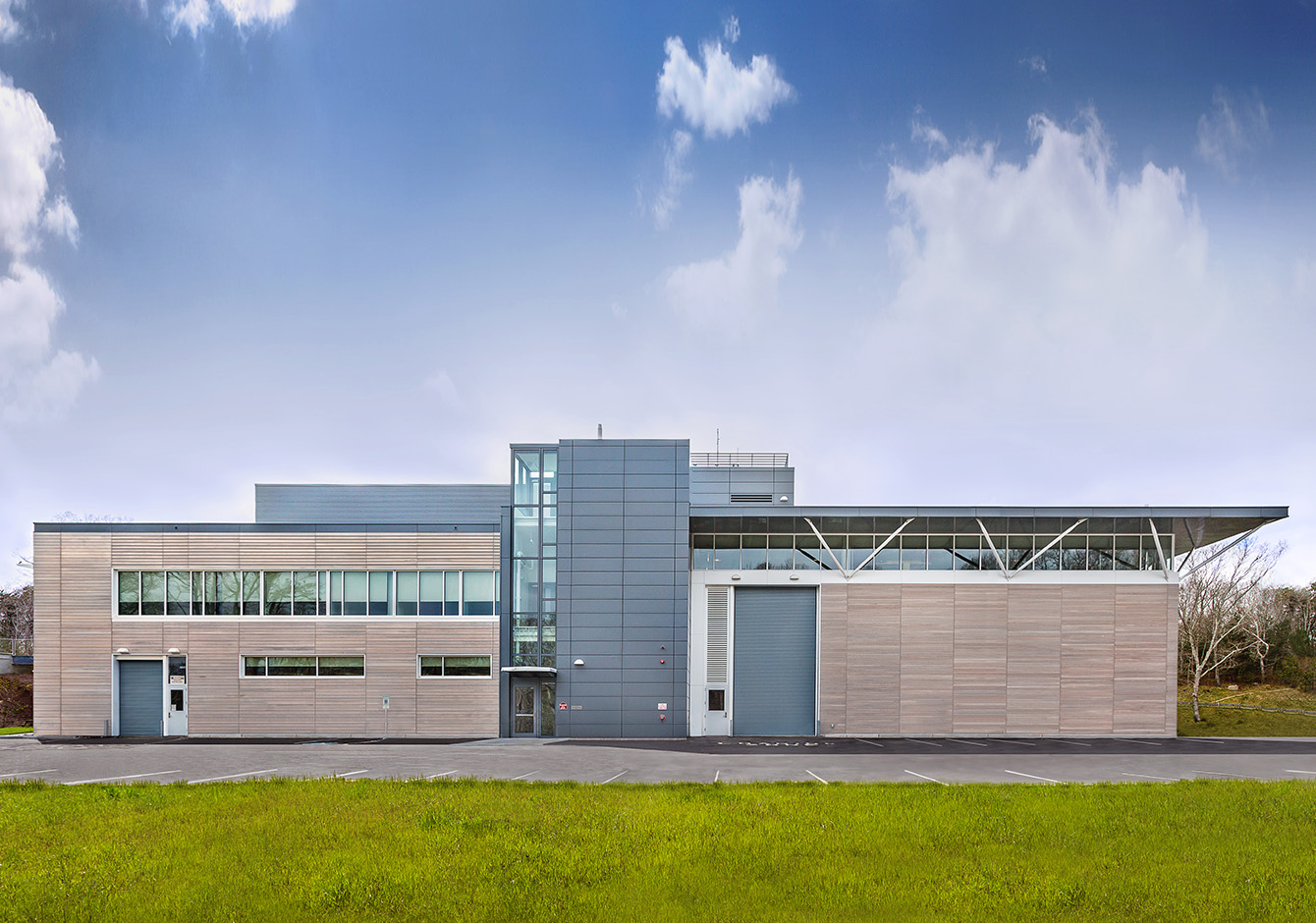
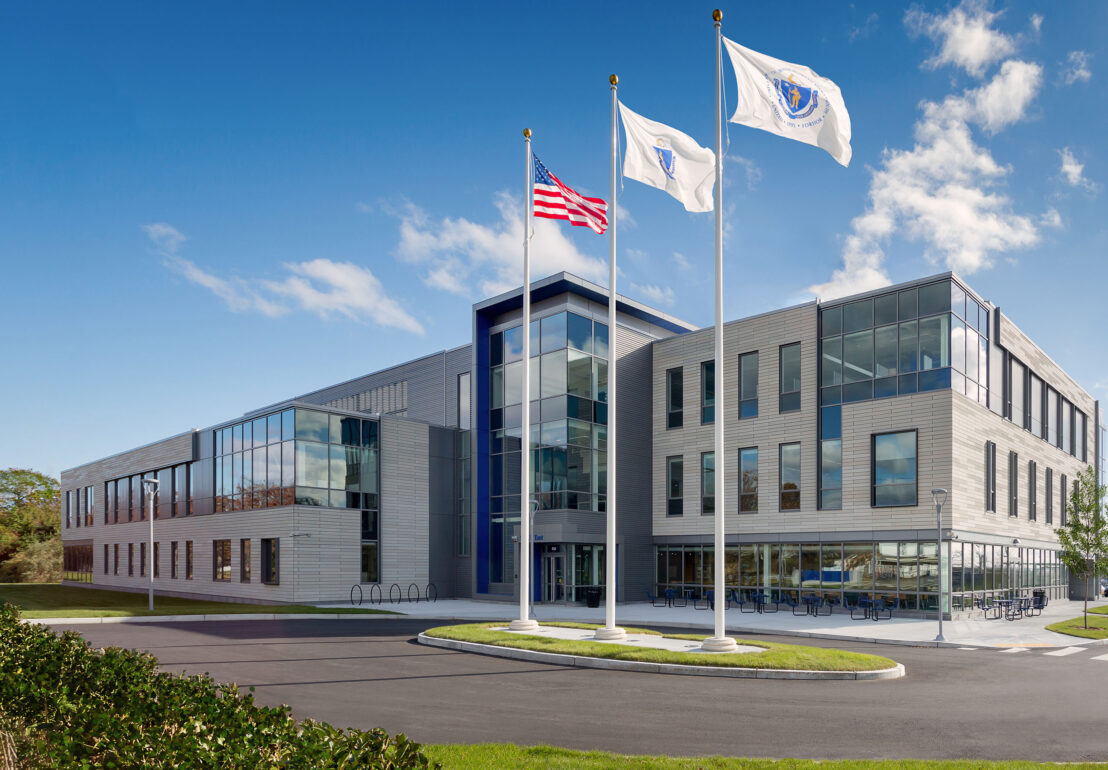
building facade

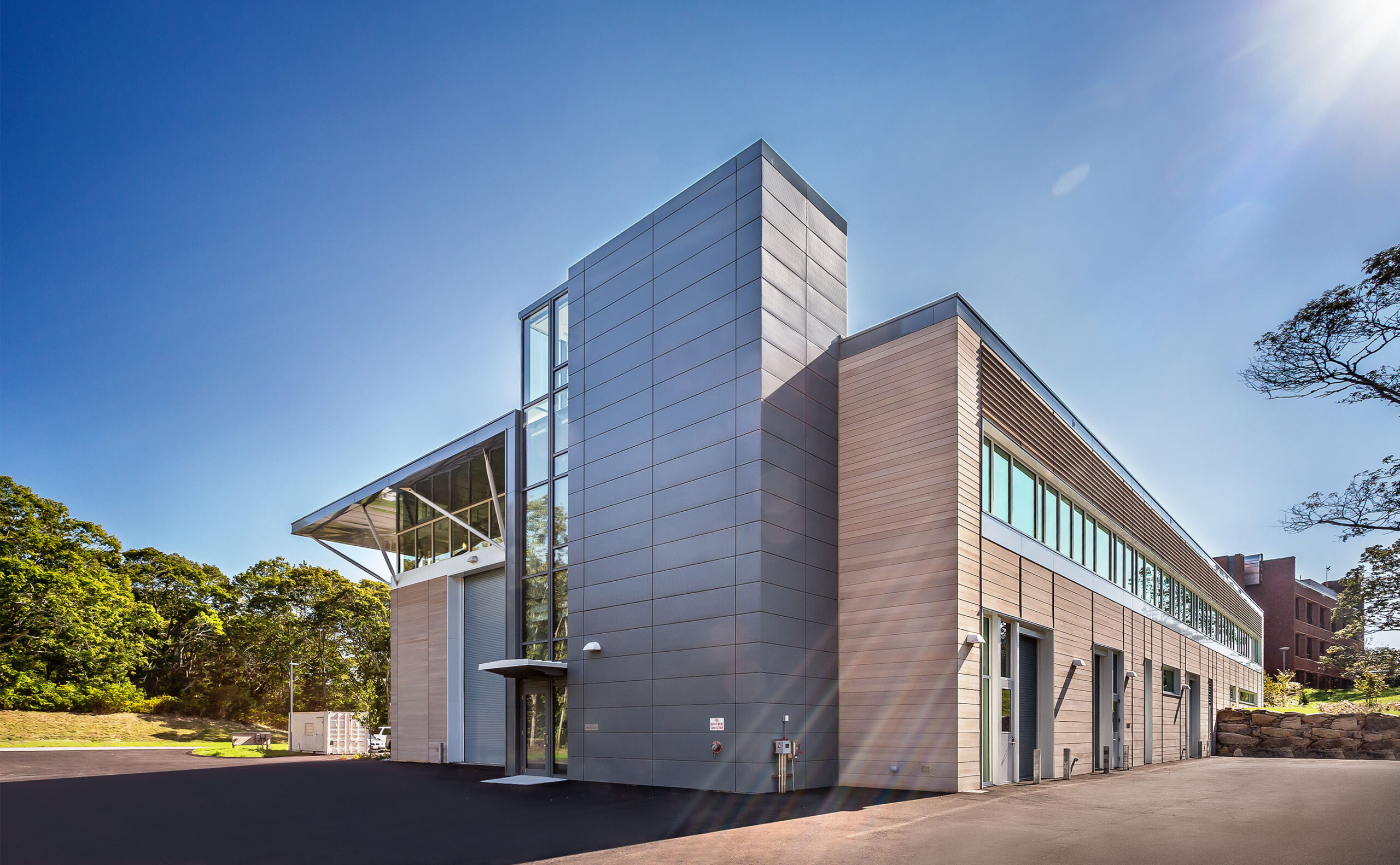
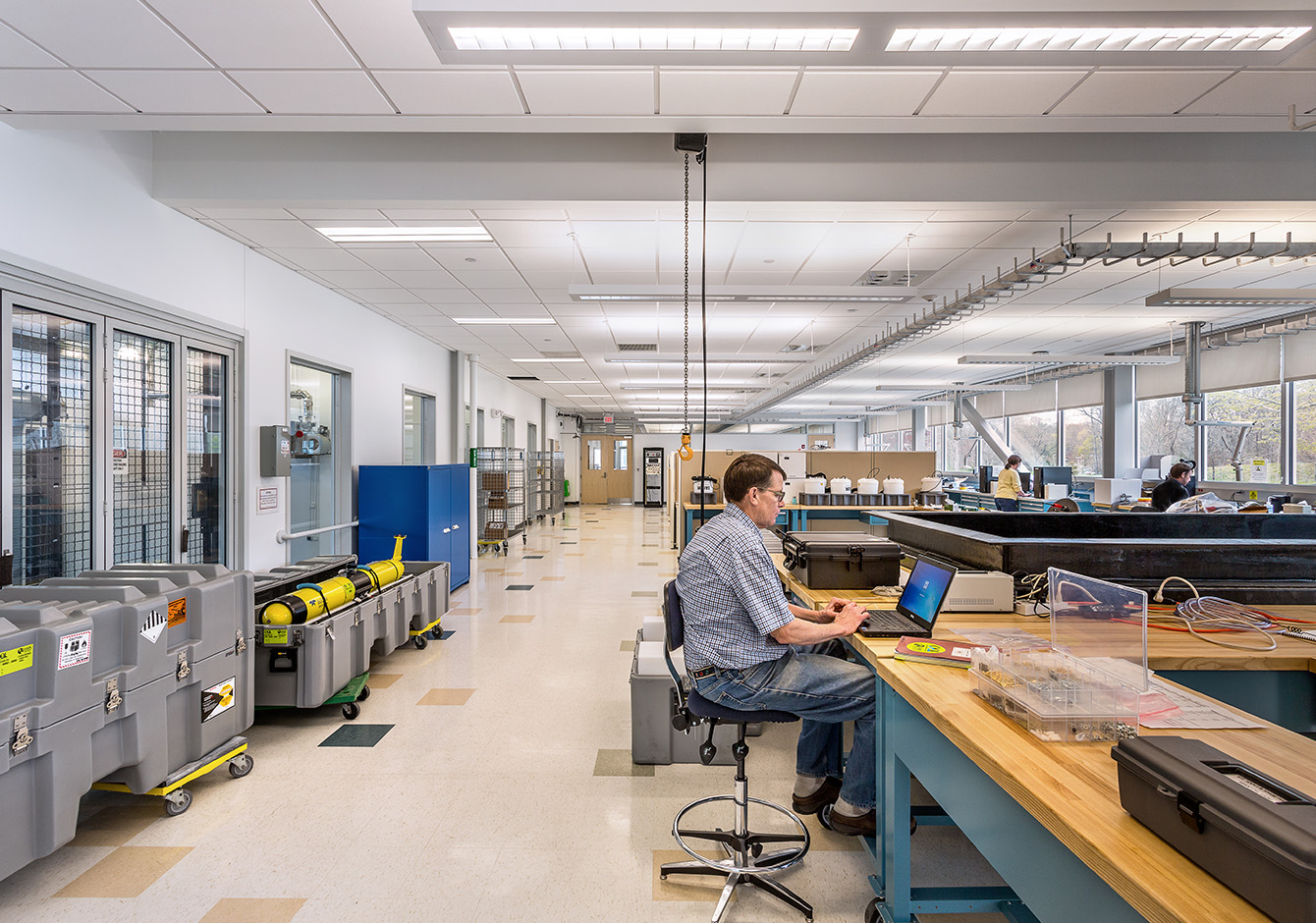
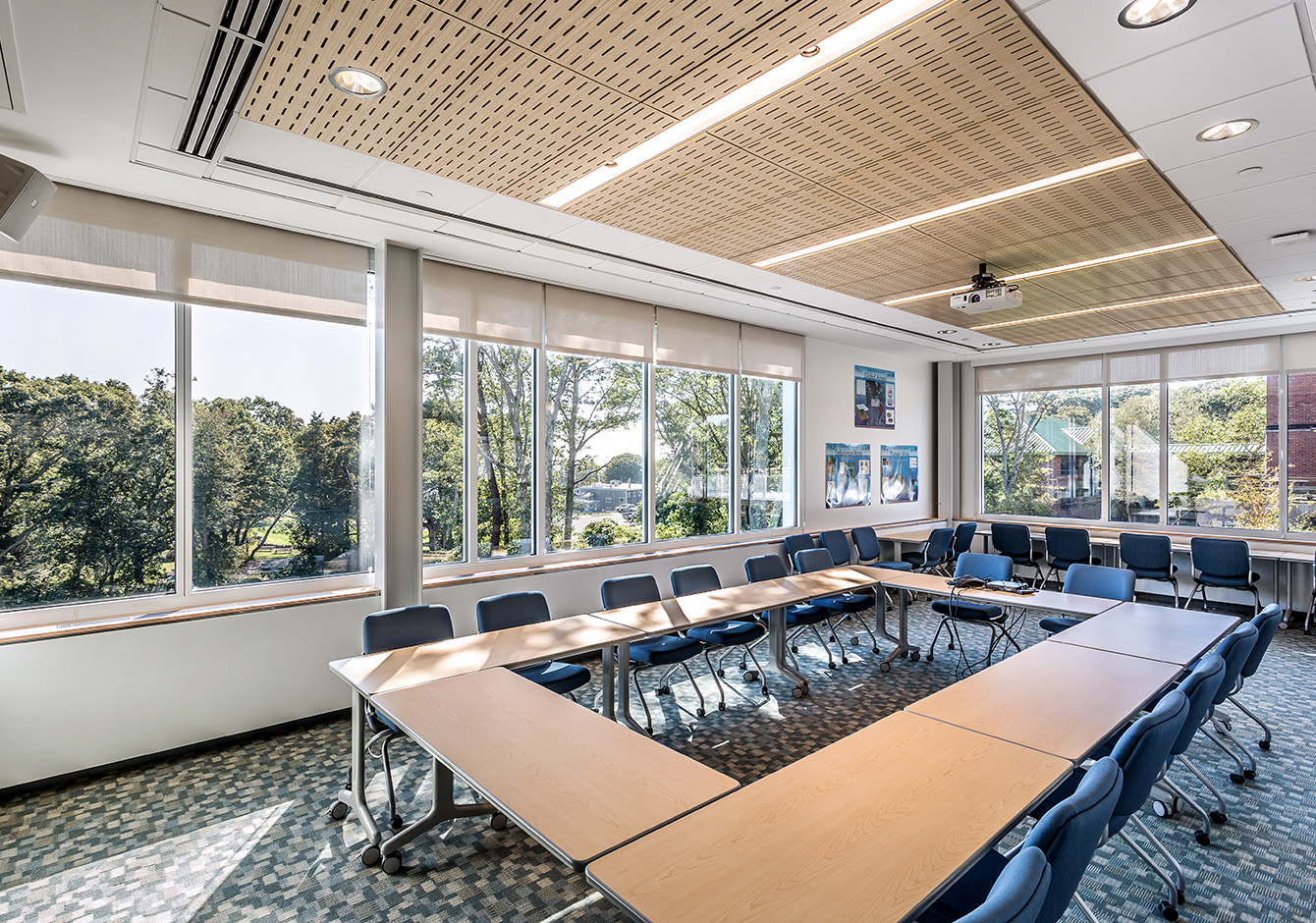
The building includes a variety of testing labs, assembly spaces, offices, meeting and conference rooms, and a large high-bay space. Visitors to the building enter the second-floor reception area via a pedestrian bridge from the parking lot. A glass-walled control room in the reception area allows visitors to view the work of the LOSOS scientists and engineers.

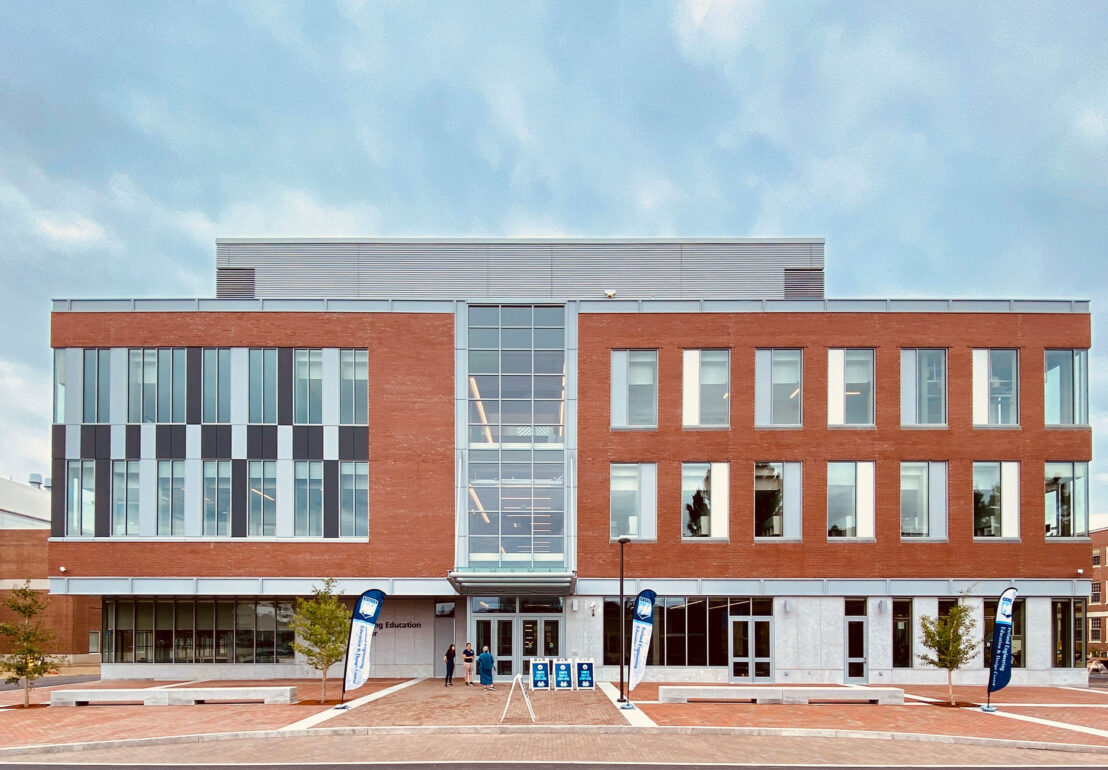
building facade
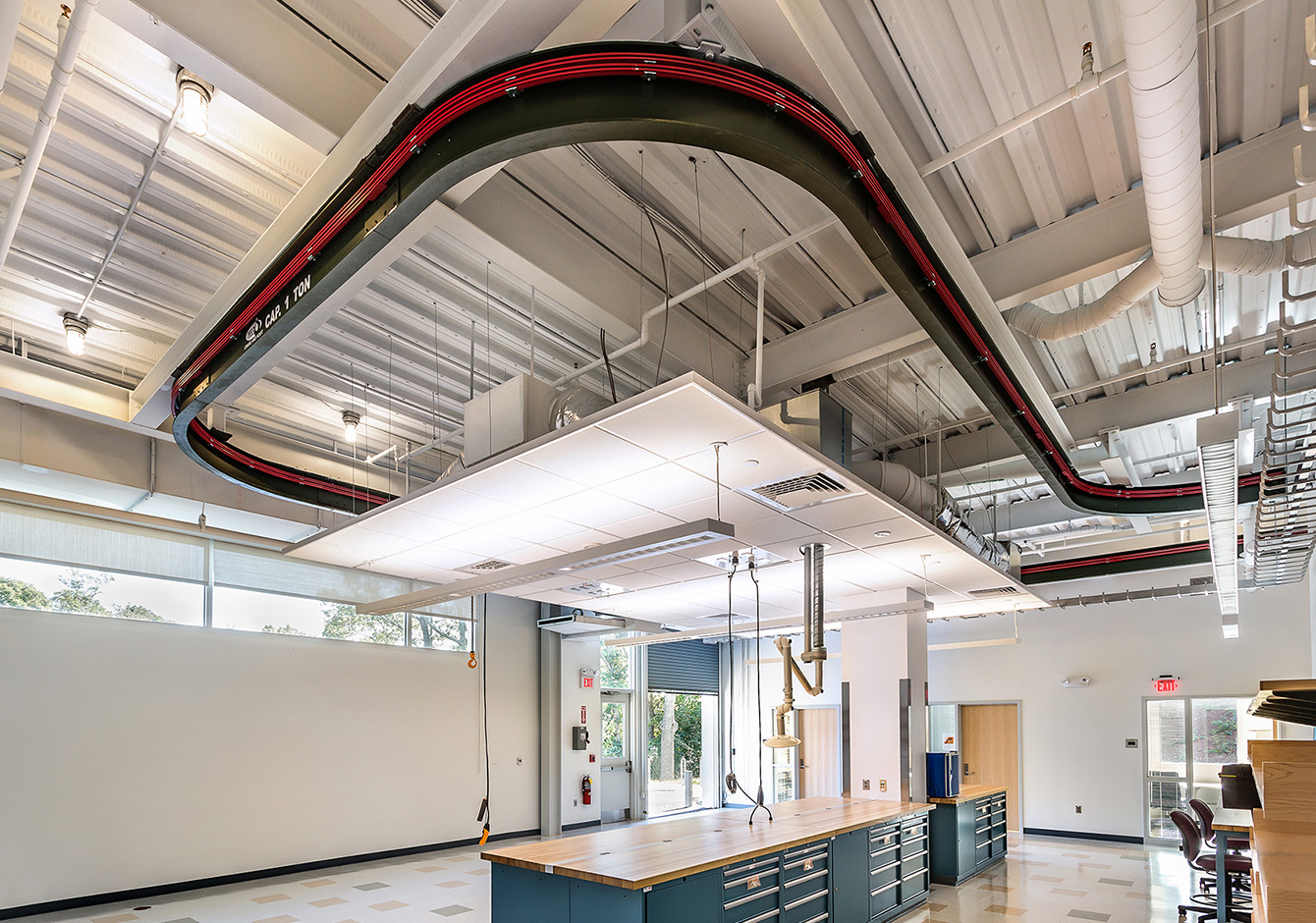
work stations with overhead track, large garage style doors in background
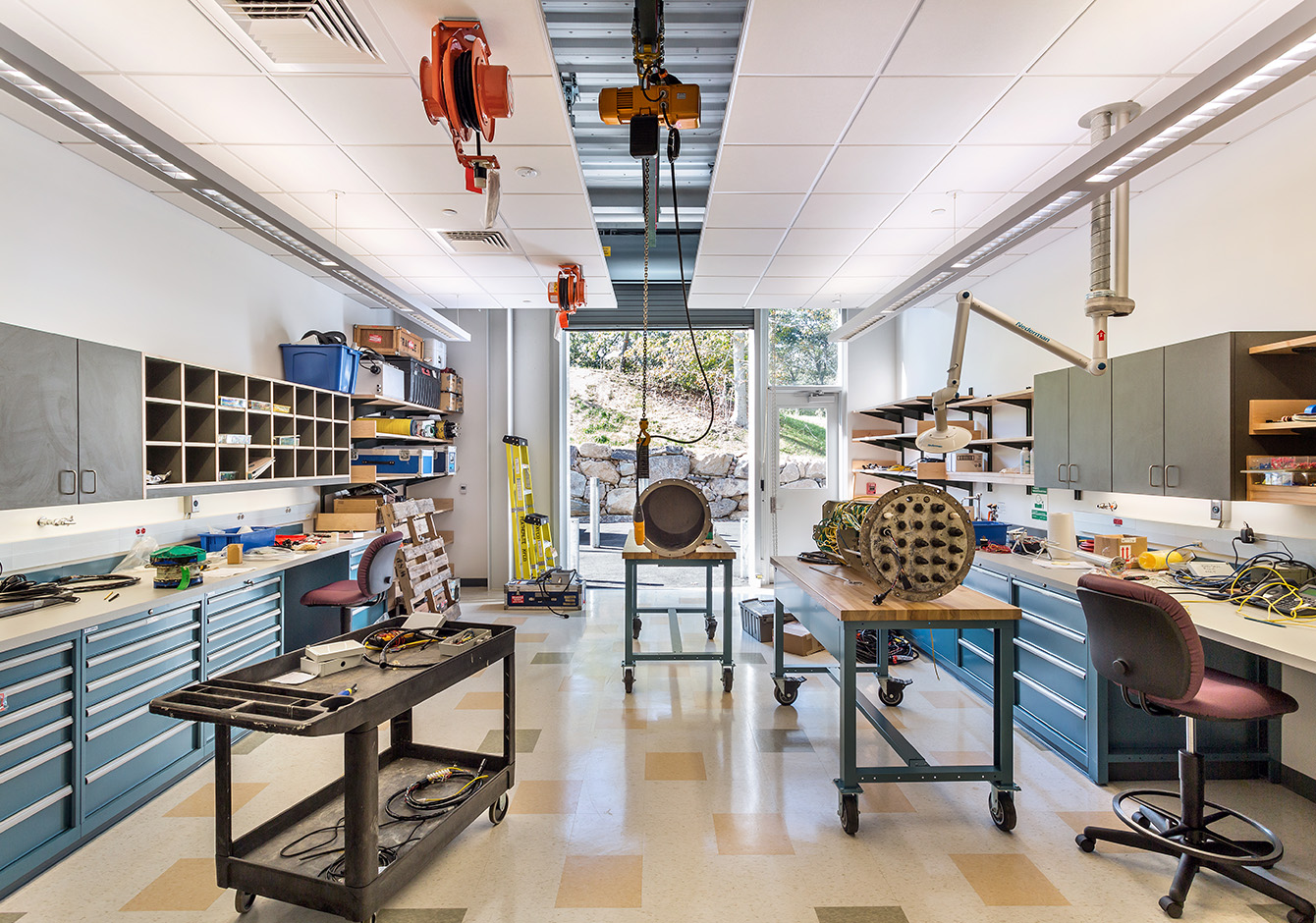
work room with tool benches along walls and benches in center

The LOSOS building was the third new facility to be designed and constructed following Ellenzweig’s completion for the Institution of its Quissett Campus 20-Year Master Plan. The first two buildings, also designed by Ellenzweig, comprised an ensemble project: the Watson Biogeochemistry Research Building and the Marine Research Building, including an addition and renovations to the existing Central Utility Plant. In addition to expanding the Institution’s research facilities, implementation of the Master Plan transformed a vehicle-focused environment, with isolated buildings separated by parking lots, into a pedestrian-centered campus with research facilities at the core and vehicles and parking lots moved to the perimeter.

work room with long tables throughout
meeting room with table in O shape surrounded by chairs

This new lab building brings the team developing OOI observing systems together under one roof in a beautiful modern building, providing opportunities to interact and share technologies with WHOI staff.

– John H. Trowbridge

Scientist Emeritus, Woods Hole Oceanographic Institution