Confidential Higher Education Client

Research and Teaching Institute for Advanced Biotechnologies

New England

Size
175,000 SF

Awards
Timber Futures Ideas Competition 2025, Third Place

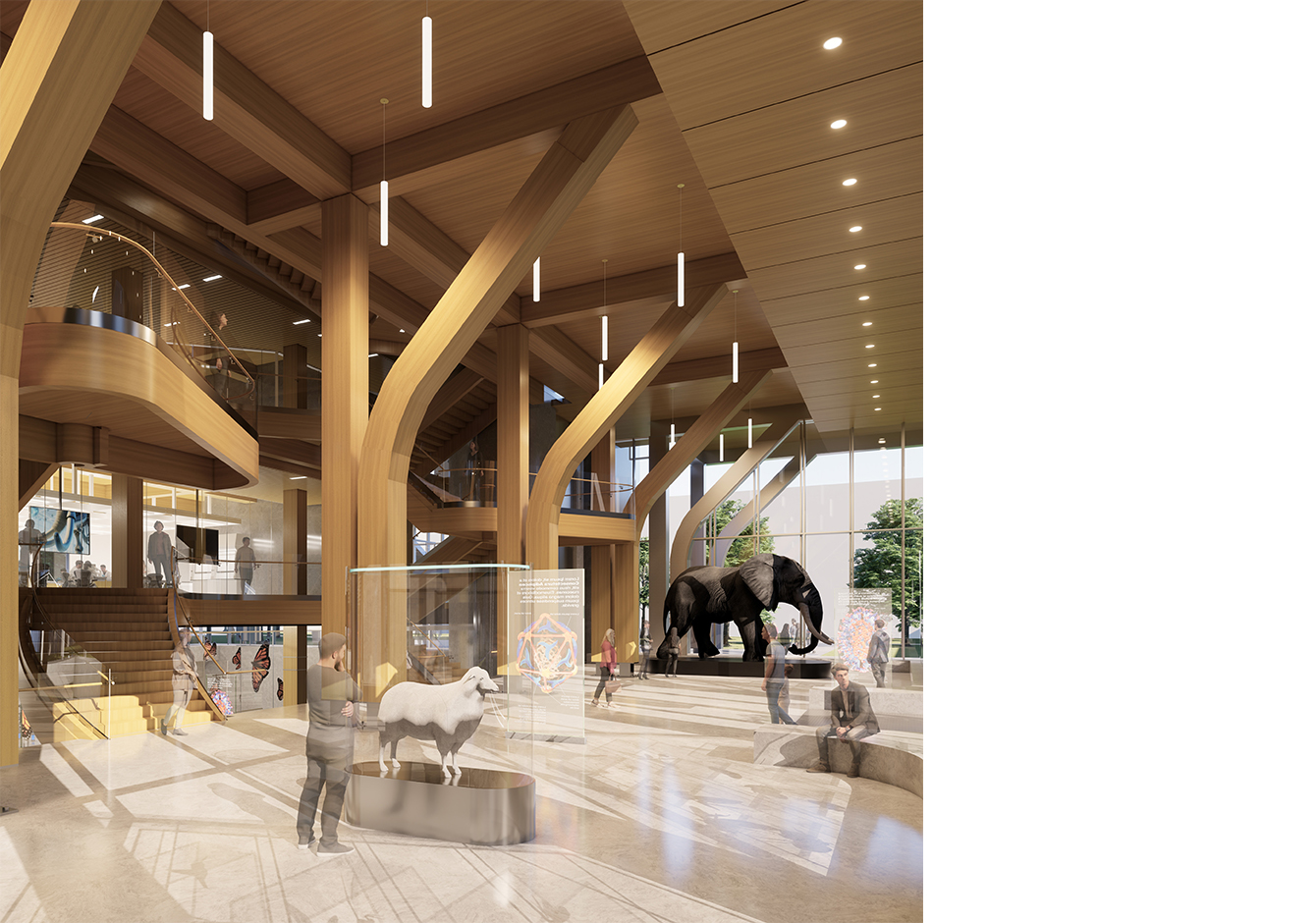
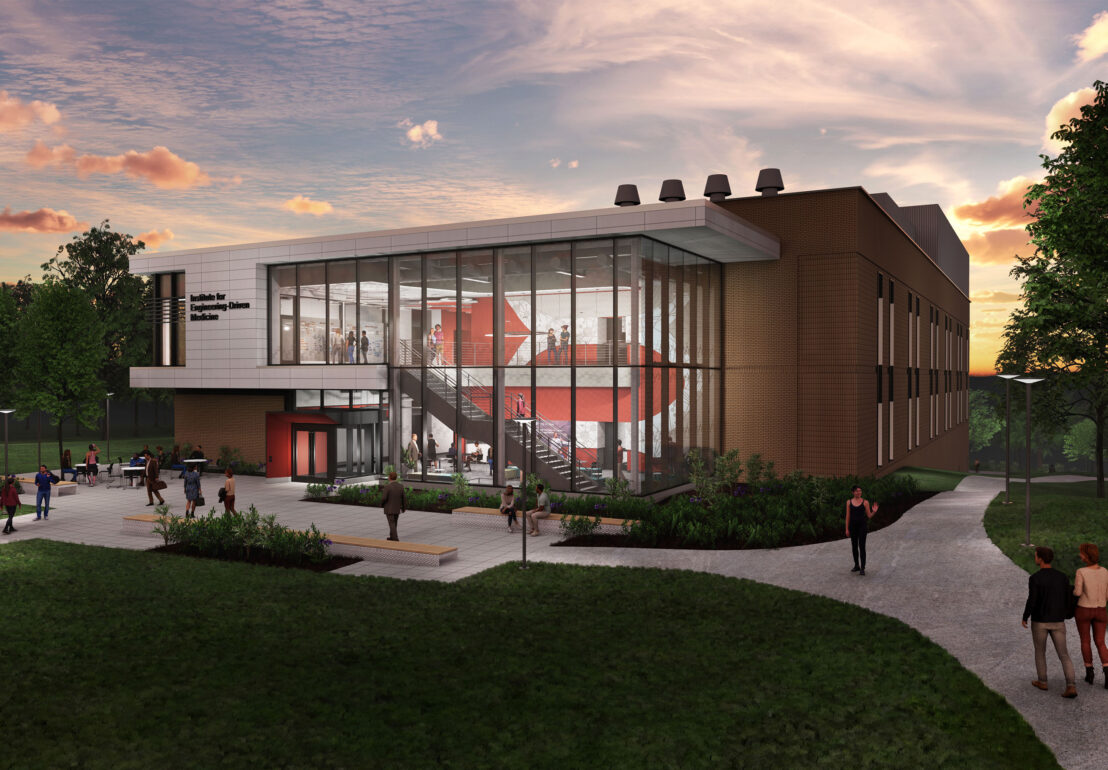
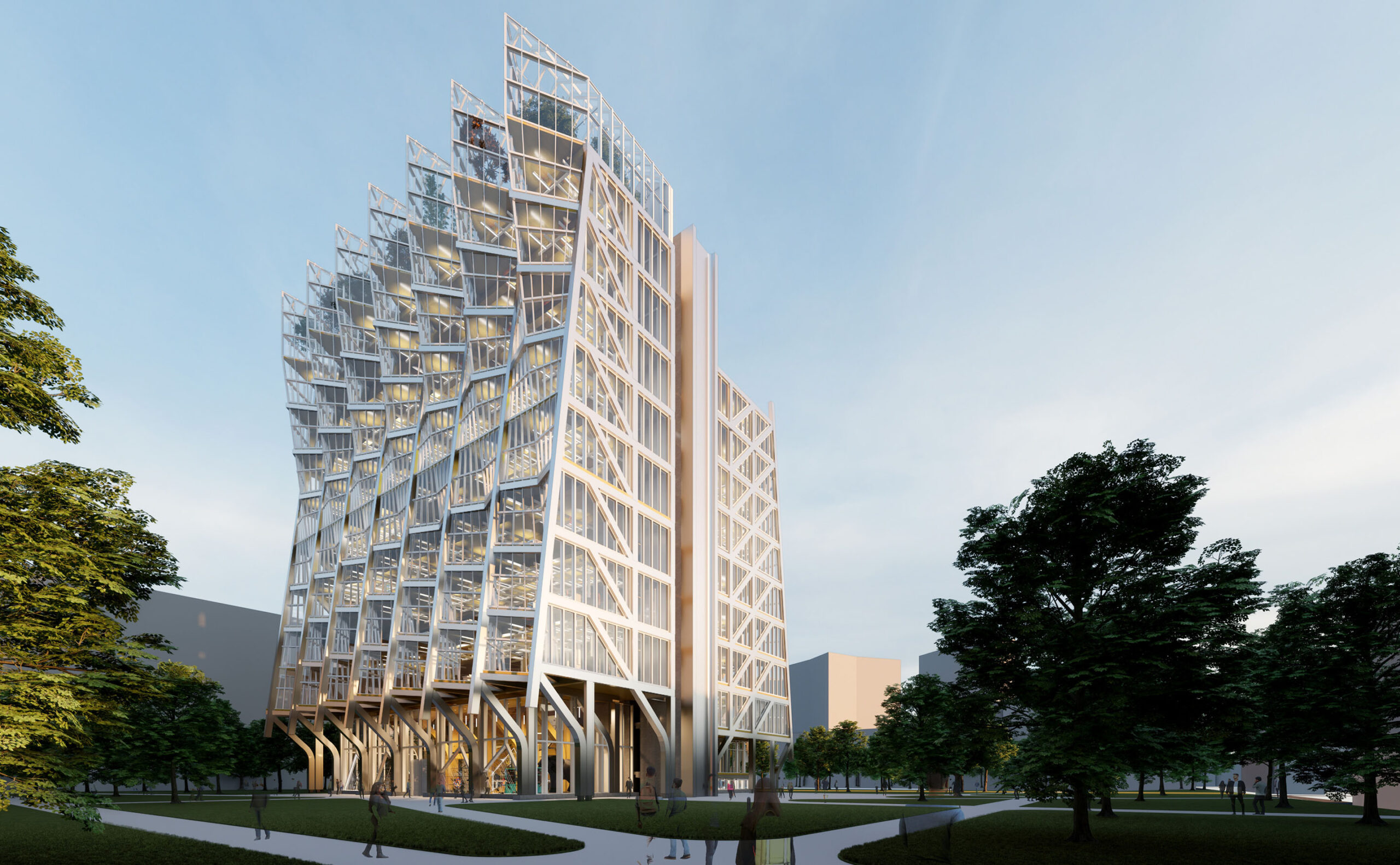
Spatial transparency and programmatic connectivity inspire the design for this 175,000 SF laboratory building.  The client envisions its new building as a place of curiosity, engagement, and discovery for its resident academic population and the public alike.  For visitors, the building is a crystalline vessel of scientific wonders and a stage for telling the exciting story of new developments in a field that hold incredible promise.
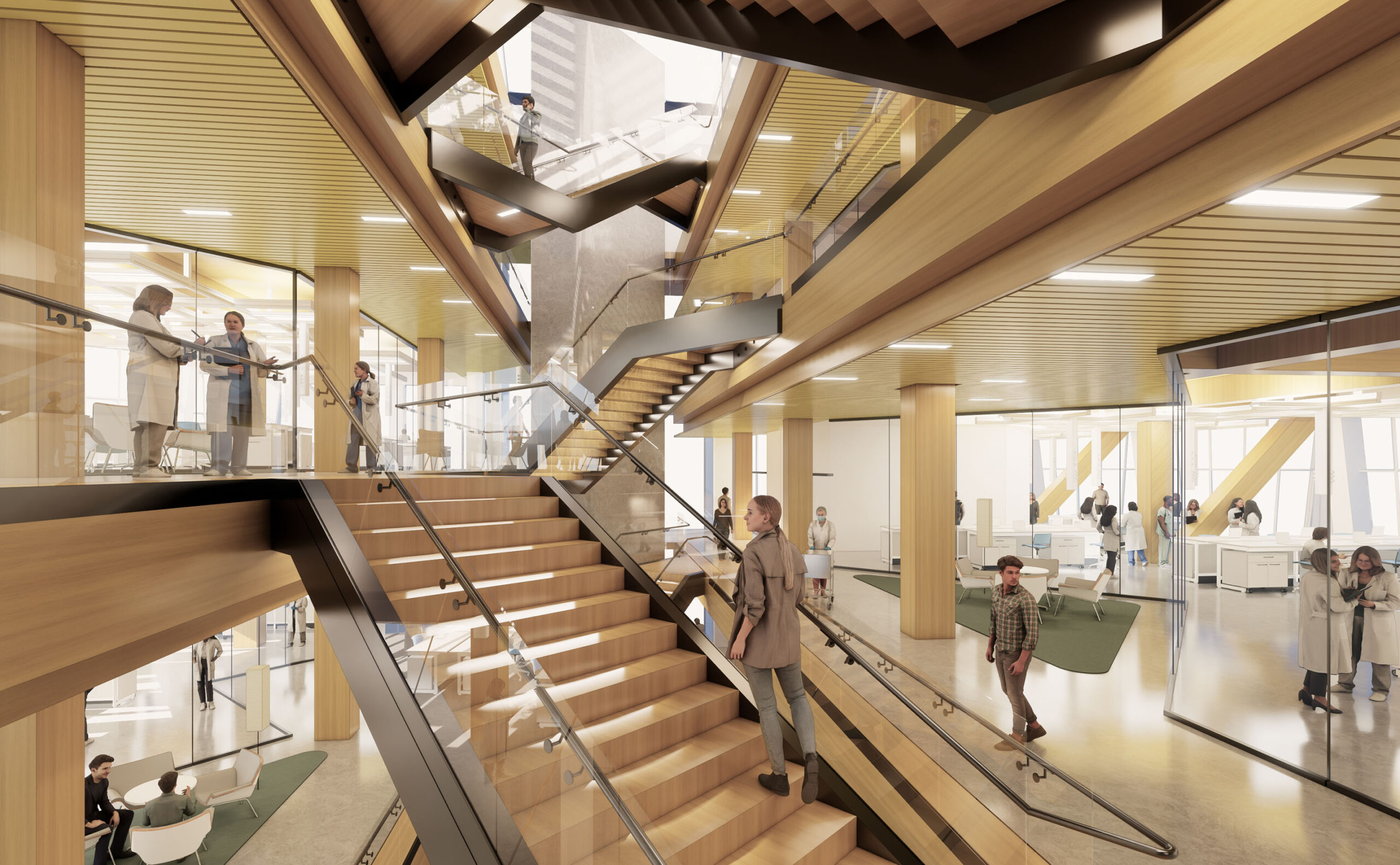
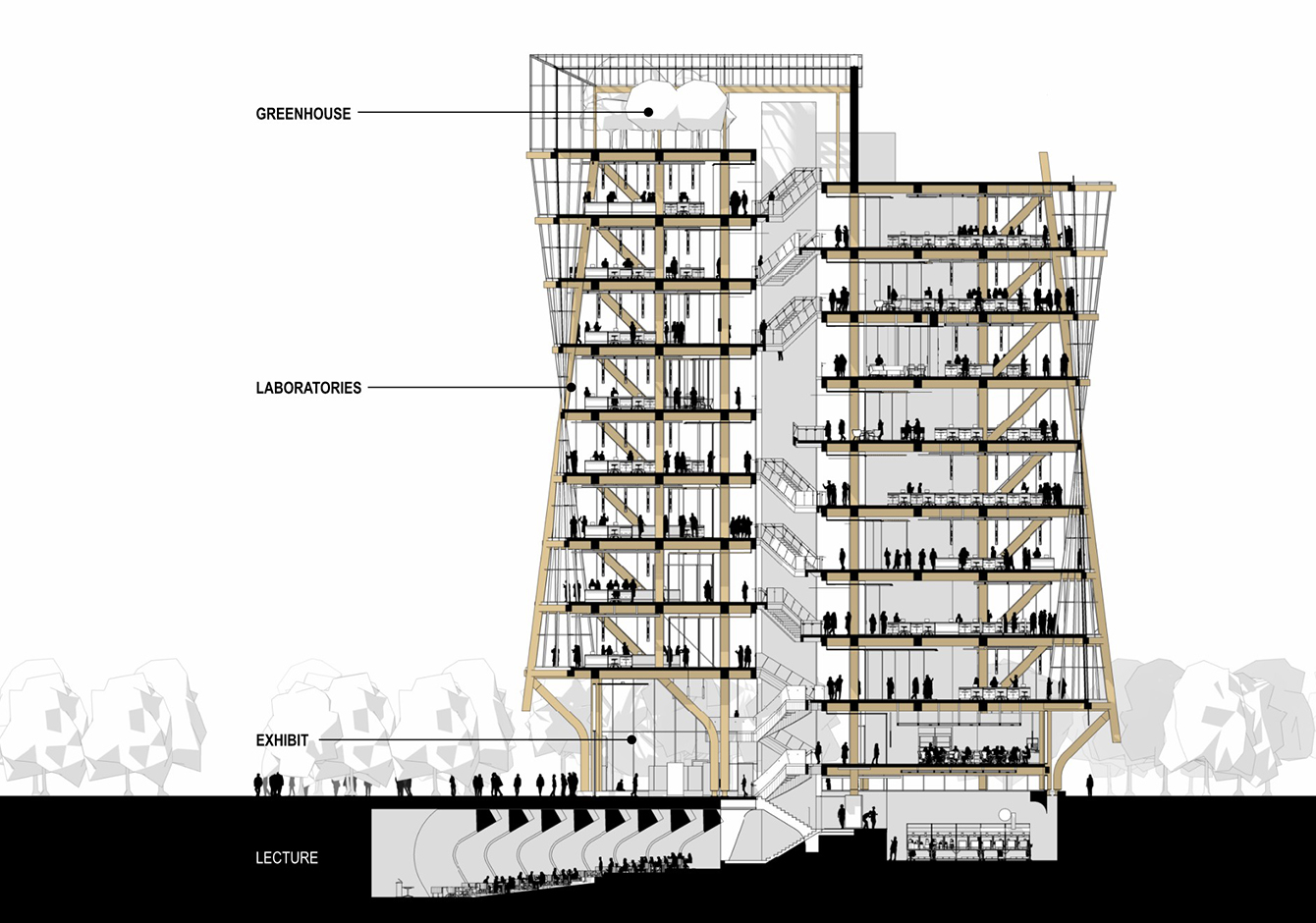
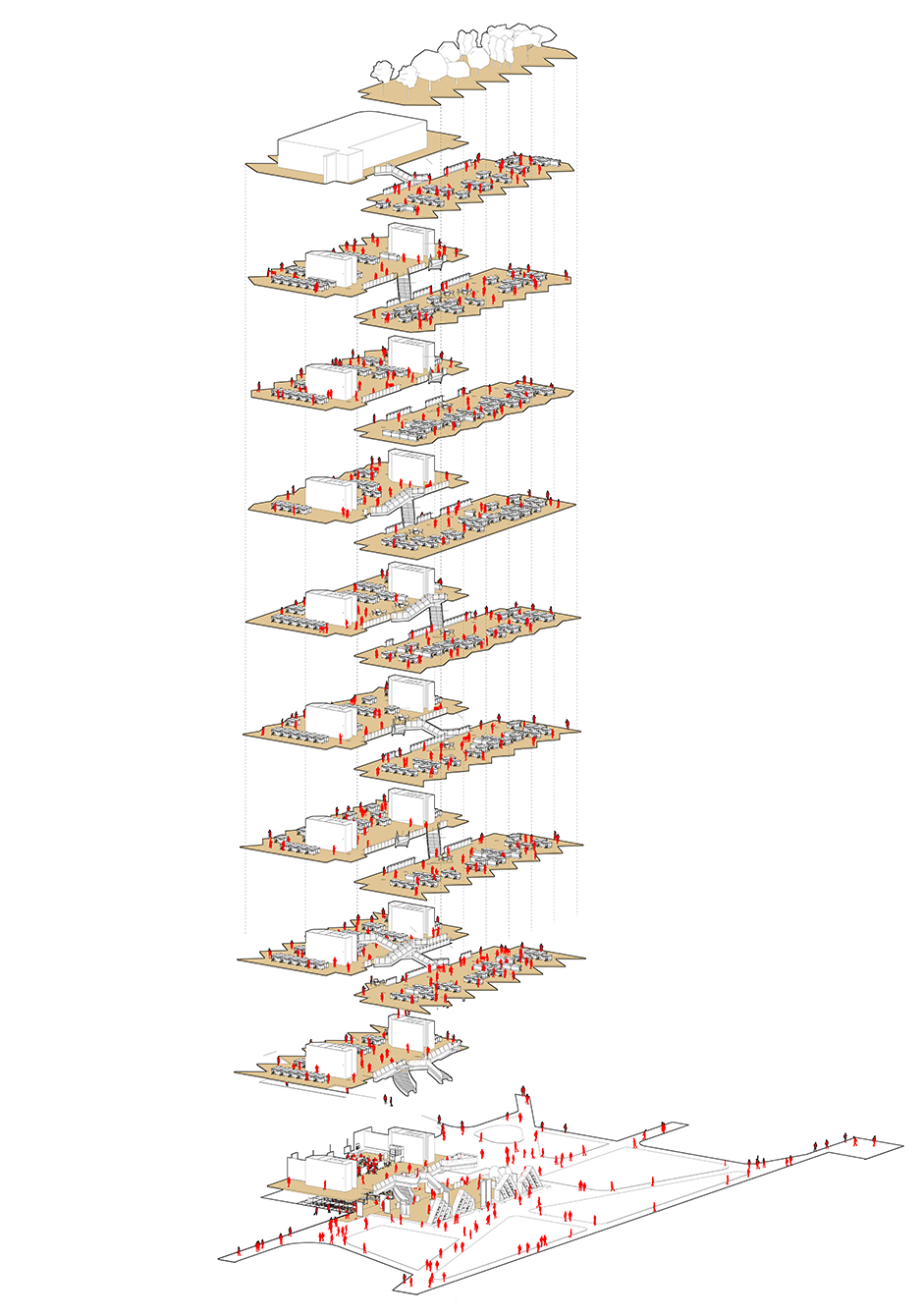
Program areas – laboratories, rooftop greenhouses, core labs, and interactive public exhibits – are organized as a single volume of shared collaborative space. Instead of stacked floors of double-loaded corridors, programs are organized into cascading platforms, each featuring diagonal views into spaces above and below. These floorplates create a dynamic network of viewpoints as opportunities for interaction and discovery.

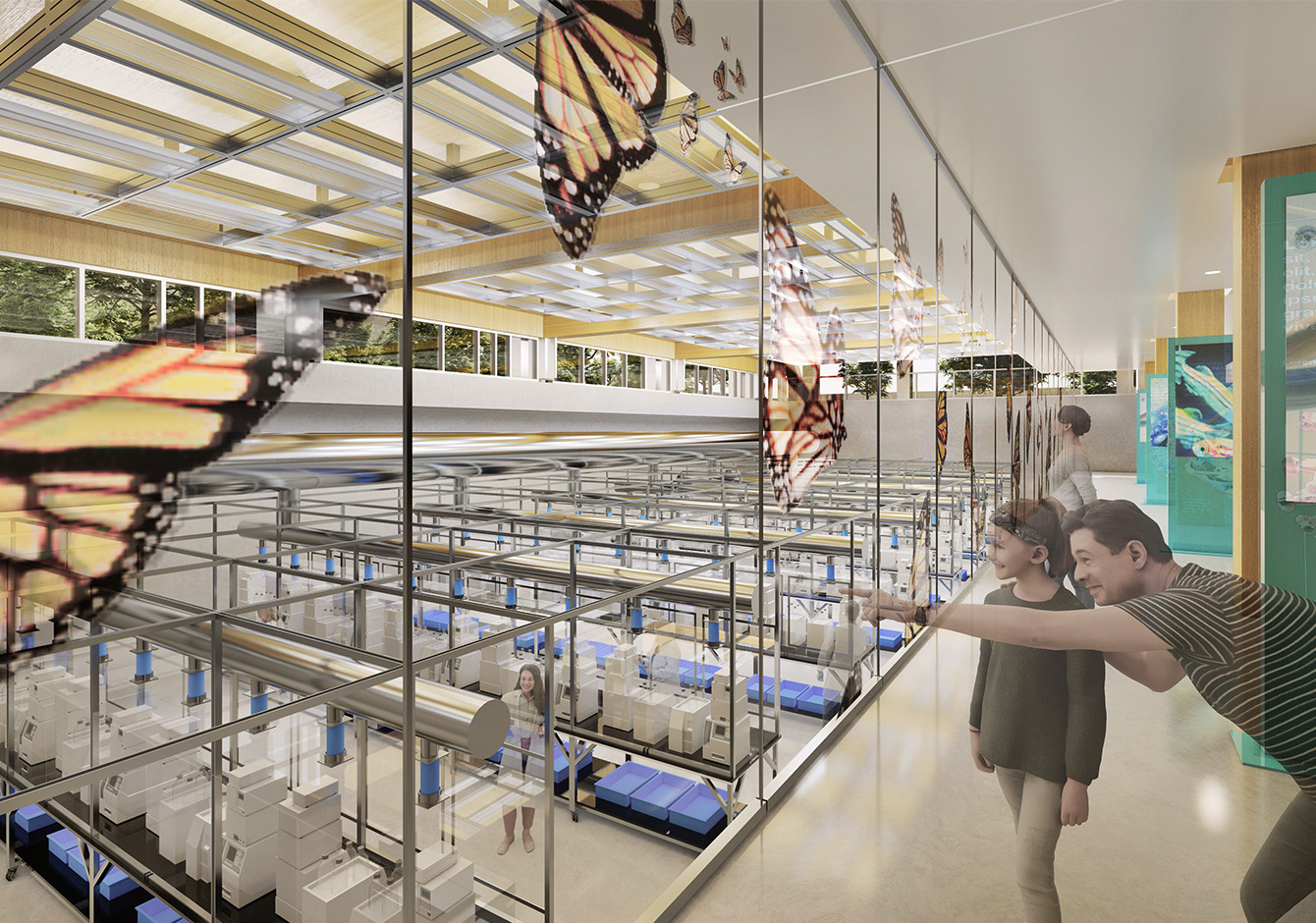
Building circulation creates an interactive, collaborative environment, with laboratories on display. The inner workings of the building reveal themselves with dramatic diagonal views all the way to the greenhouses on the top floor.

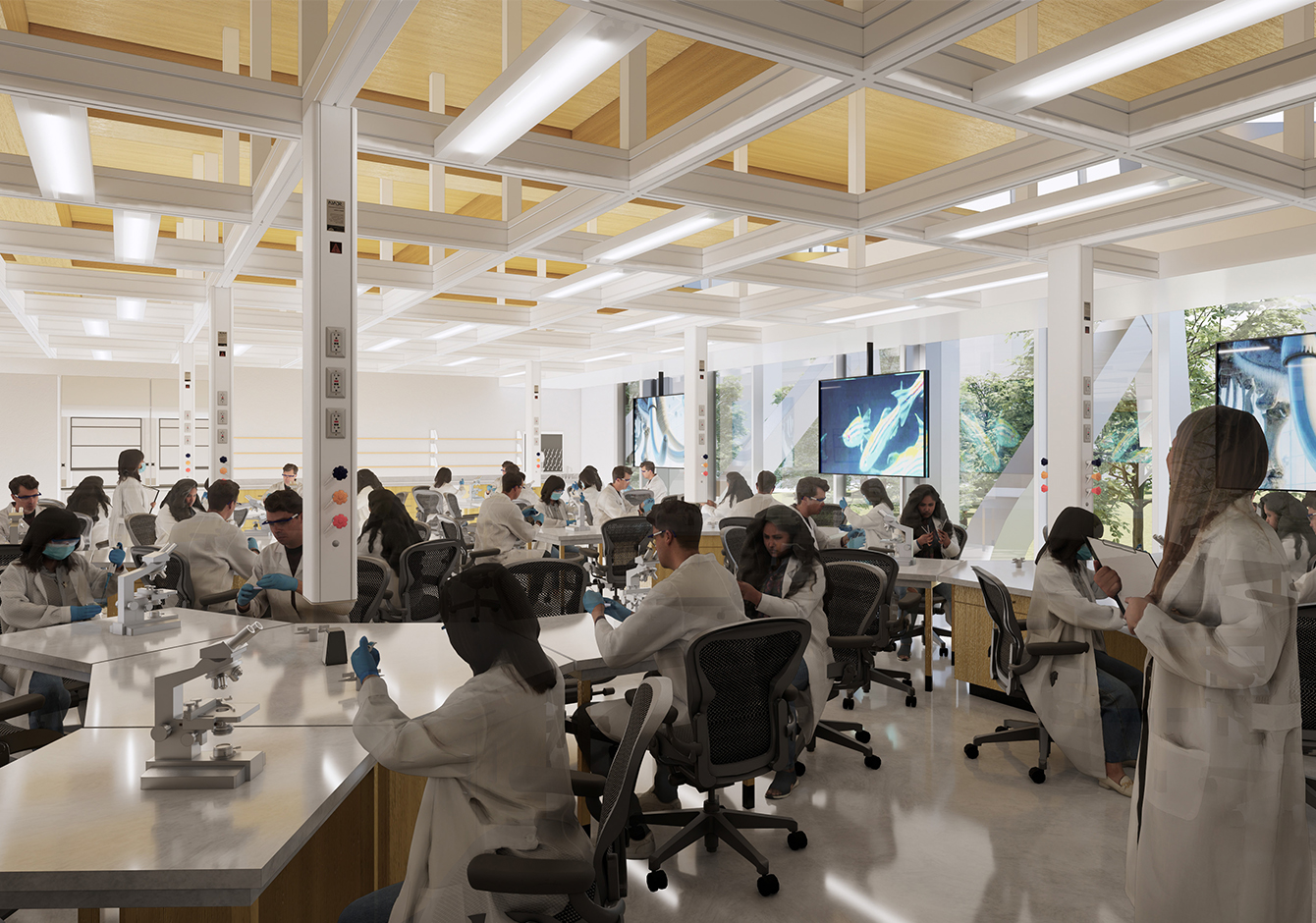
Structurally, mass timber frames showcase the promise of engineered biology by transforming renewable wood into a high-performance structural material that rivals steel and concrete.  Its use not only celebrates the natural strength and beauty of wood, but also highlights how biological innovation can shape a more sustainable, resilient built environment.

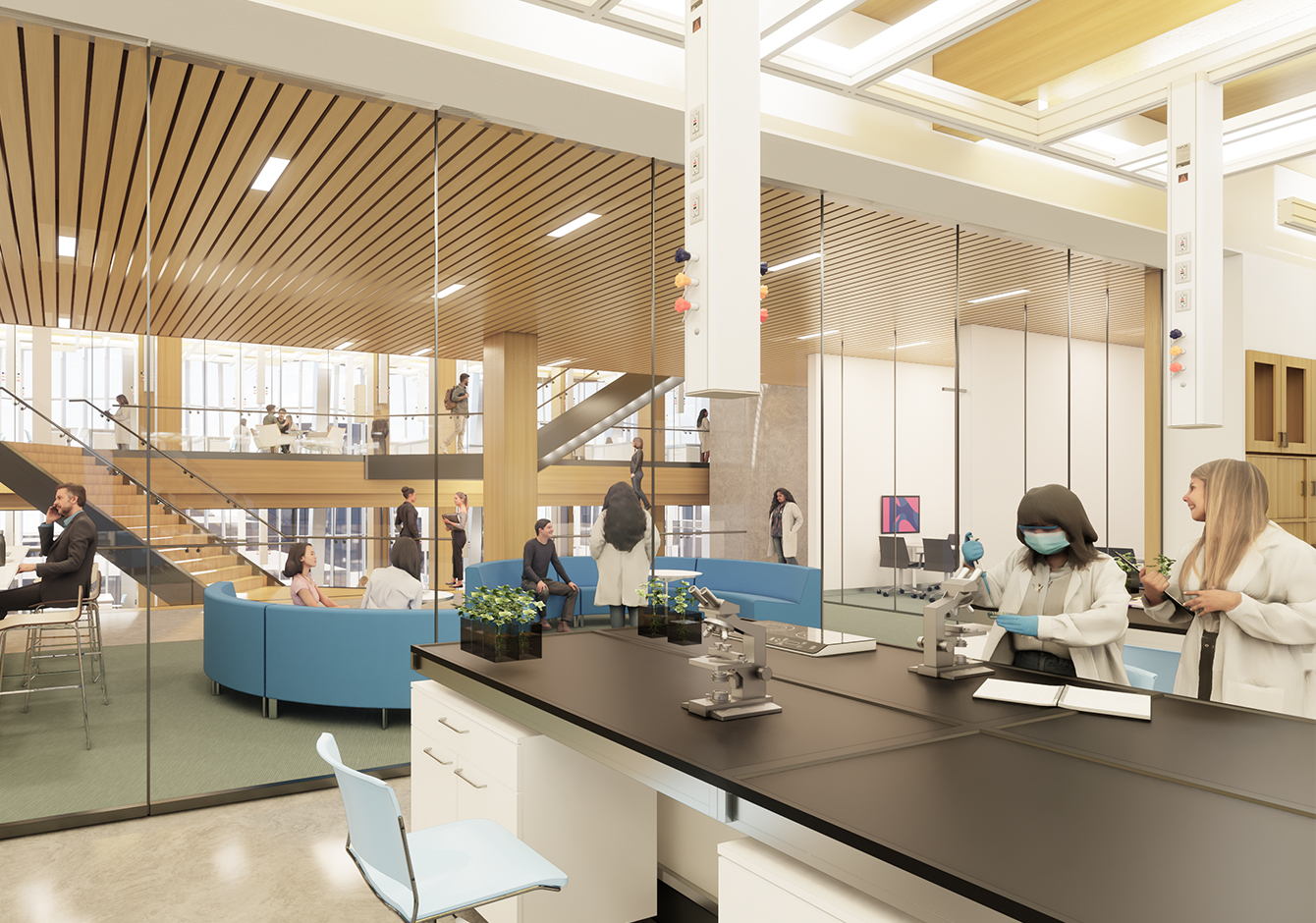
Labs are positioned and expressed to make scientific activity visible and engaging for students, researchers, and visitors alike. The research environment and public space merge completely in airy collaboration zones.

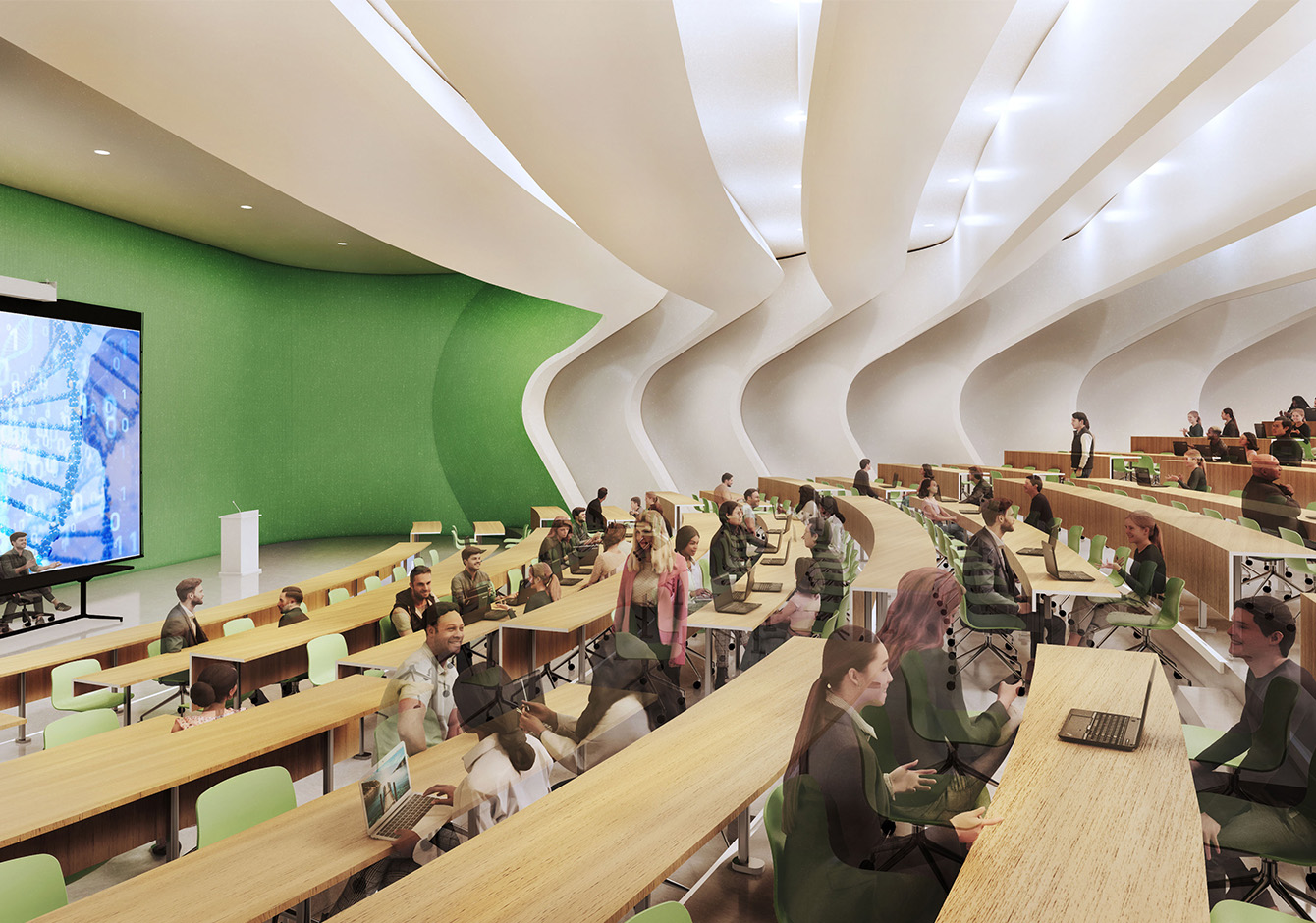
Fluid geometries and biophilic design elements enhance the interactive lecture halls and Technology-Enabled Learning (TEAL) environments. Teaching laboratories are designed for maximum flexibility, featuring ceiling-mounted service systems that deliver utilities from above. This approach eliminates the need for fixed casework, allowing workstations to consist of lightweight tables that can be easily reconfigured.